
I. Types of women’s jeans
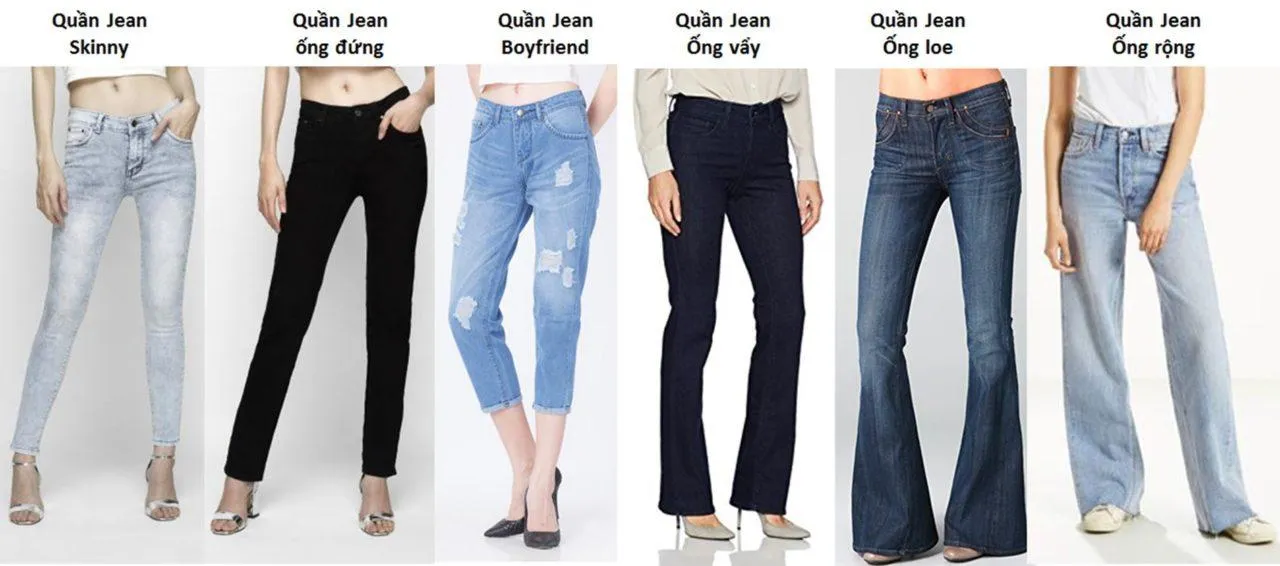
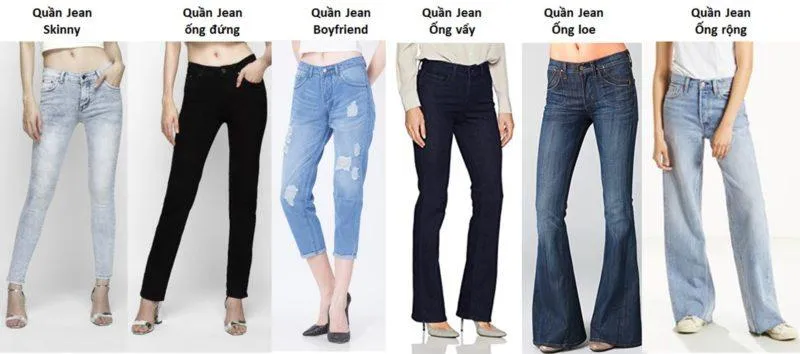
When it comes to types of jeans, you have probably heard names like boyfriend jeans, fitted jeans, tight jeans, women’s baggy jeans, skinny, skinny jeans, flare, bootcut, bell-bottoms and many more. Jeans can be classified in several ways. By leg, there are tapered (women’s tapered jeans), straight (straight jeans) and wide-leg. By waistband, there are low-rise, mid-rise and high-rise. By length, there are full-length, ankle-length and cropped jeans.
There are many ways to classify jeans, but the most common and widely accepted is by cut. Women’s jeans fall into six main cuts: straight-leg jeans, skinny jeans, flare jeans, boyfriend jeans, wide-leg jeans and shorts. Strictly speaking, shorts are not classed as jeans, but we still call them denim shorts, jean shorts and so on. Let’s look at each type and how to choose it.
Types of jeans
1.1 Straight-leg jeans
Straight-leg jeans, also called straight jeans, are the most common type of jeans and the classic cut that has existed since jeans were born. In straight-leg jeans, the leg is cut straight from the knee down, and the leg opening is as wide as the knee. Unlike flare or skinny jeans, which follow clear trends at different times, straight-leg jeans have stayed steady over time. You can find them in every period of fashion.
1.2 Skinny jeans
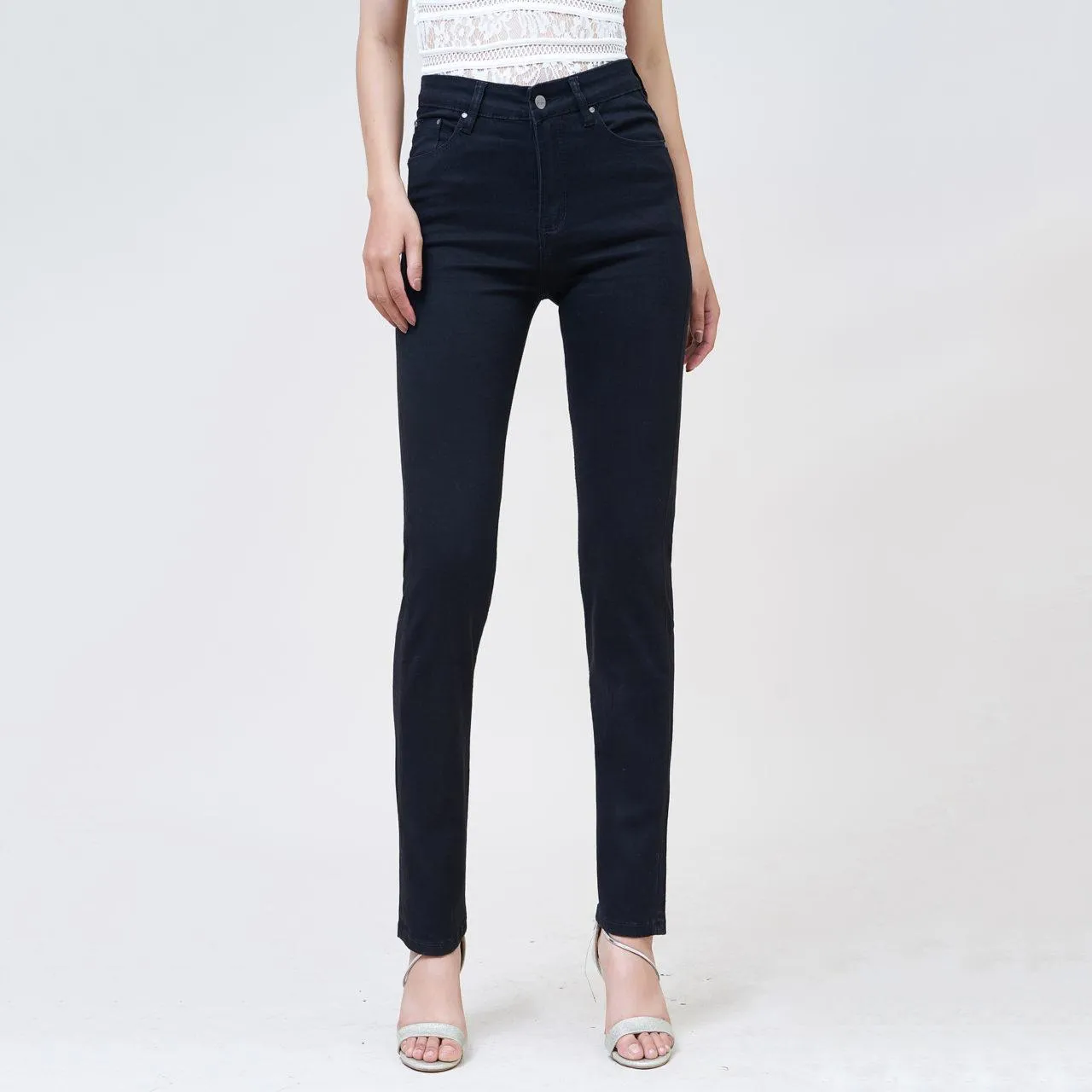
Skinny jeans (also called drainpipes, stovepipes, cigarette pants, pencil pants, skinny pants or skinnies) are jeans cut narrow through the leg with a small leg opening.
Skinny jeans originate from breeches, which were fashionable in the 17th century in the West. Breeches appeared in France during the reign of Louis XIII and then spread to England and other European countries, popular among the upper classes at different times. In the late 19th and early 20th centuries they fell out of fashion, until in the 1950s many music and film stars started wearing them, and skinny jeans were born. The first to wear skinny jeans were screen stars such as Roy Rogers, the Lone Ranger, the Cisco Kid, Zorro, Gene Autry, Marilyn Monroe and Sandra Dee. They then became a widespread trend thanks to rock and roll stars such as Elvis Presley, the Rolling Stones and the Beatles.
The skinny jeans trend lasted until the 1980s and declined in the 1990s with the rise of hip-hop, when singers wore baggy jeans with oversized shirts or T-shirts. In the early 2000s, skinny jeans came back thanks to fashion icons, notably the model Kate Moss. The popularity of garage rock and indie rock also helped bring these fitted jeans back.
In the past, the rise of skinny jeans was closely tied to music in different eras. Today skinny jeans are worn by everyone, in every profession, in a wide range of designs and styles, especially women’s skinny jeans. There are full-length skinny, cropped skinny, cropped skinny with rolled hems, super skinny and more, in many colours and washes.
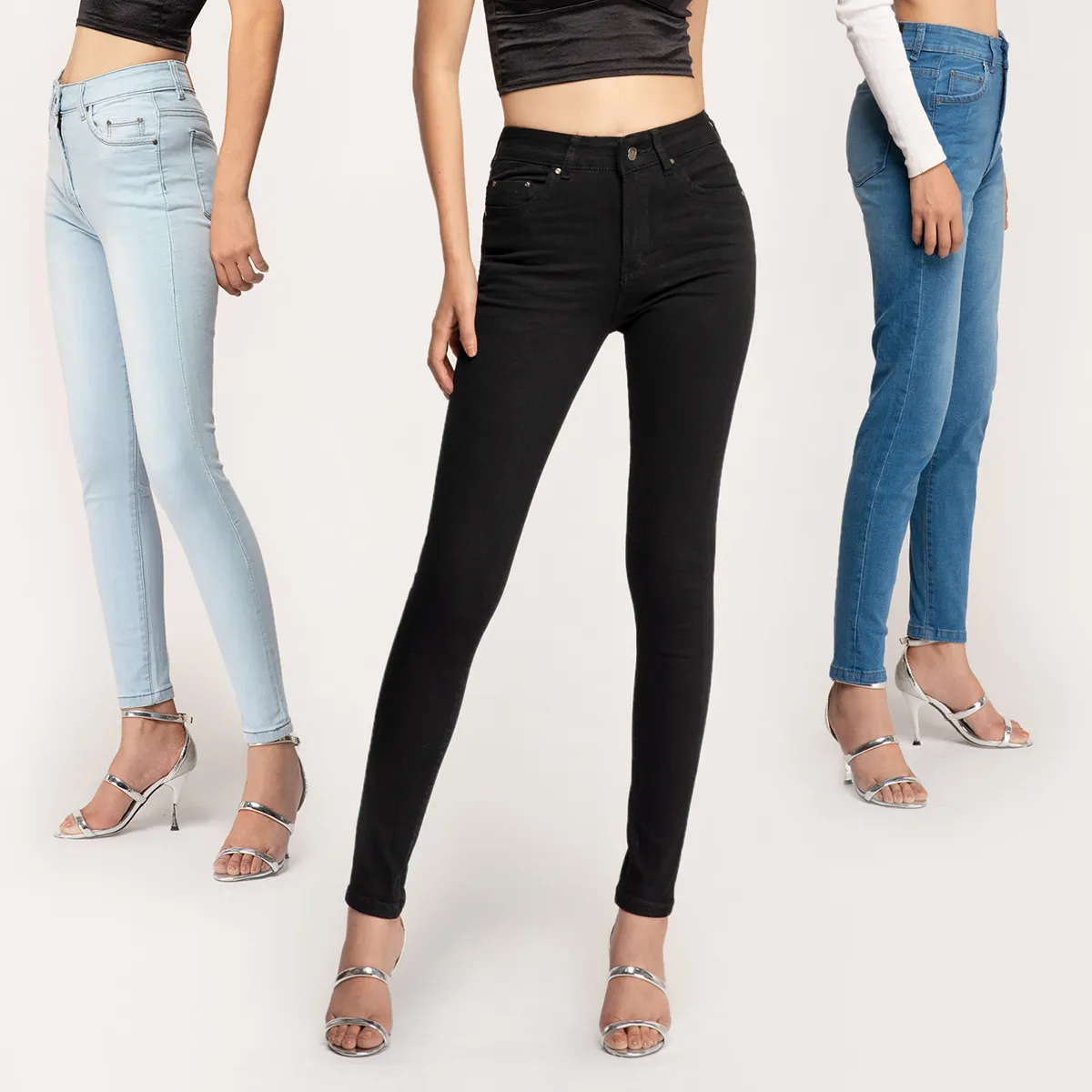
Another version of skinny jeans is super skinny: even closer-fitting, with a smaller leg opening than regular skinny jeans. Because super skinny jeans are tighter, they are usually made from thinner fabric with more stretch than skinny jeans, for comfort.
Note:
- Skinny jeans are skinny trousers made from denim. In other words, skinny jeans are one type of skinny trousers. Skinny trousers are different from leggings and treggings. Skinny trousers are proper trousers made from many different fabrics, and whatever the fabric, they have front and back pockets. Leggings and treggings have no pockets, or only decorative ones.
- Leggings, also called footless tights, are tights that reach the calf or ankle. They are usually made from nylon, cotton blends or Lycra (a smooth, close-fitting, very stretchy fabric used for sportswear).
- Treggings are long leggings, a cross between trousers and leggings. Treggings reach the heel and are tucked into shoes. Like leggings, they are made from thin, stretchy fabric. Some treggings are made from stretch denim and are called jeggings (jeans + leggings/treggings).
1.3 Boyfriend jeans
In fashion, any garment with “boyfriend” in its name is a women’s piece with a design borrowed from menswear. Women’s boyfriend jeans, or boy-cut jeans, are no exception.
Inspired by men’s jeans, this cut is roomy, playful, strong and rugged, with a long rise and a leg cut wider than the body. Boyfriend jeans are loved for their bold, unconventional feel compared with traditional jeans, while keeping what makes jeans jeans: they are easy to style and work for any occasion, from going out to work to parties. Before 1930, boyfriend jeans didn’t exist: women simply borrowed their boyfriend’s jeans and called them “boyfriend’s”. Jeans brands later made boyfriend cuts to meet women’s demand.
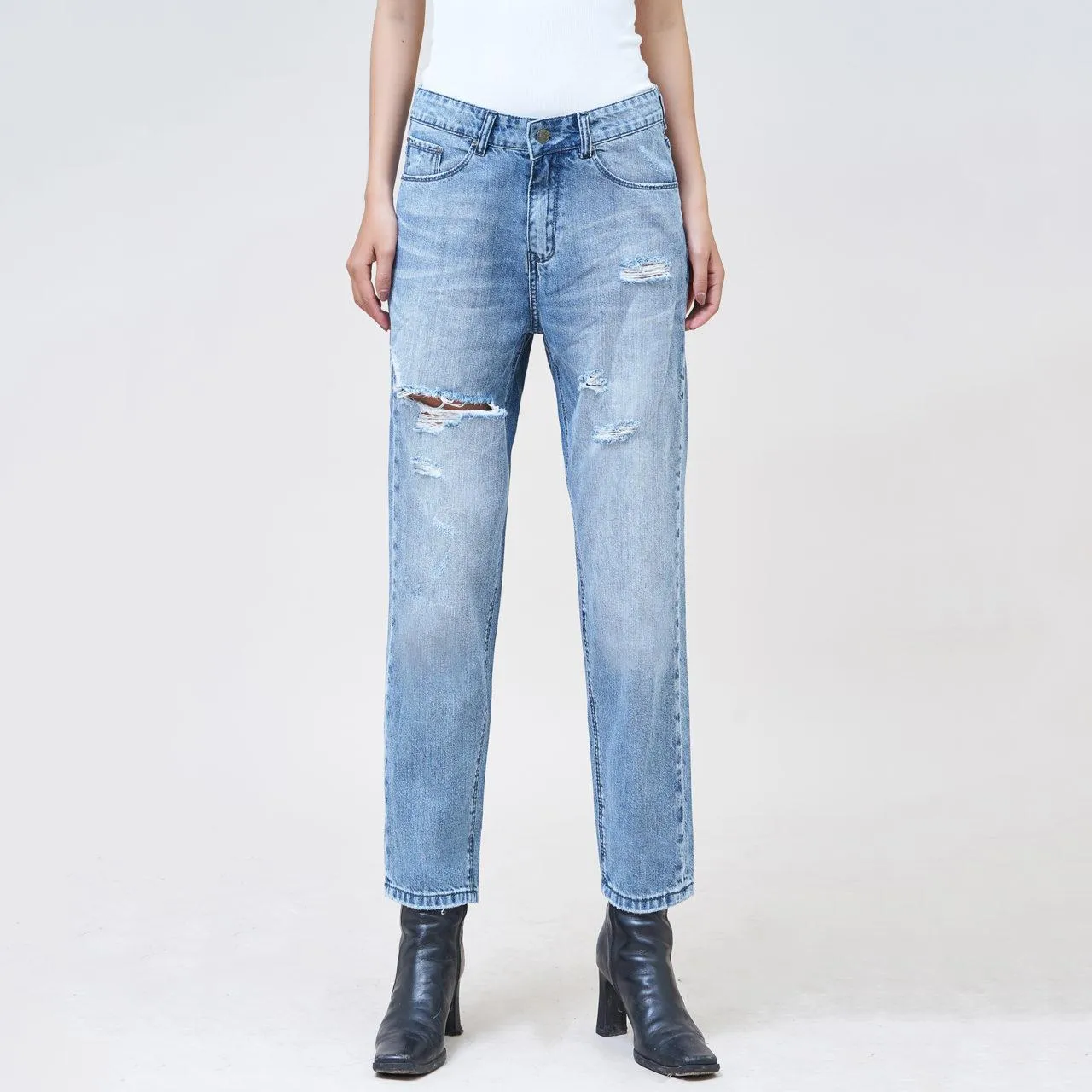
Girlfriend jeans
Boyfriend jeans have two variations: girlfriend jeans and mom jeans. Girlfriend jeans are the more feminine of the two, with a slimmer, straighter leg and a neater crotch. The cut is more traditional, closer-fitting and higher-waisted. Some manufacturers use thicker, stiffer fabric so they are more flattering than boyfriend jeans.
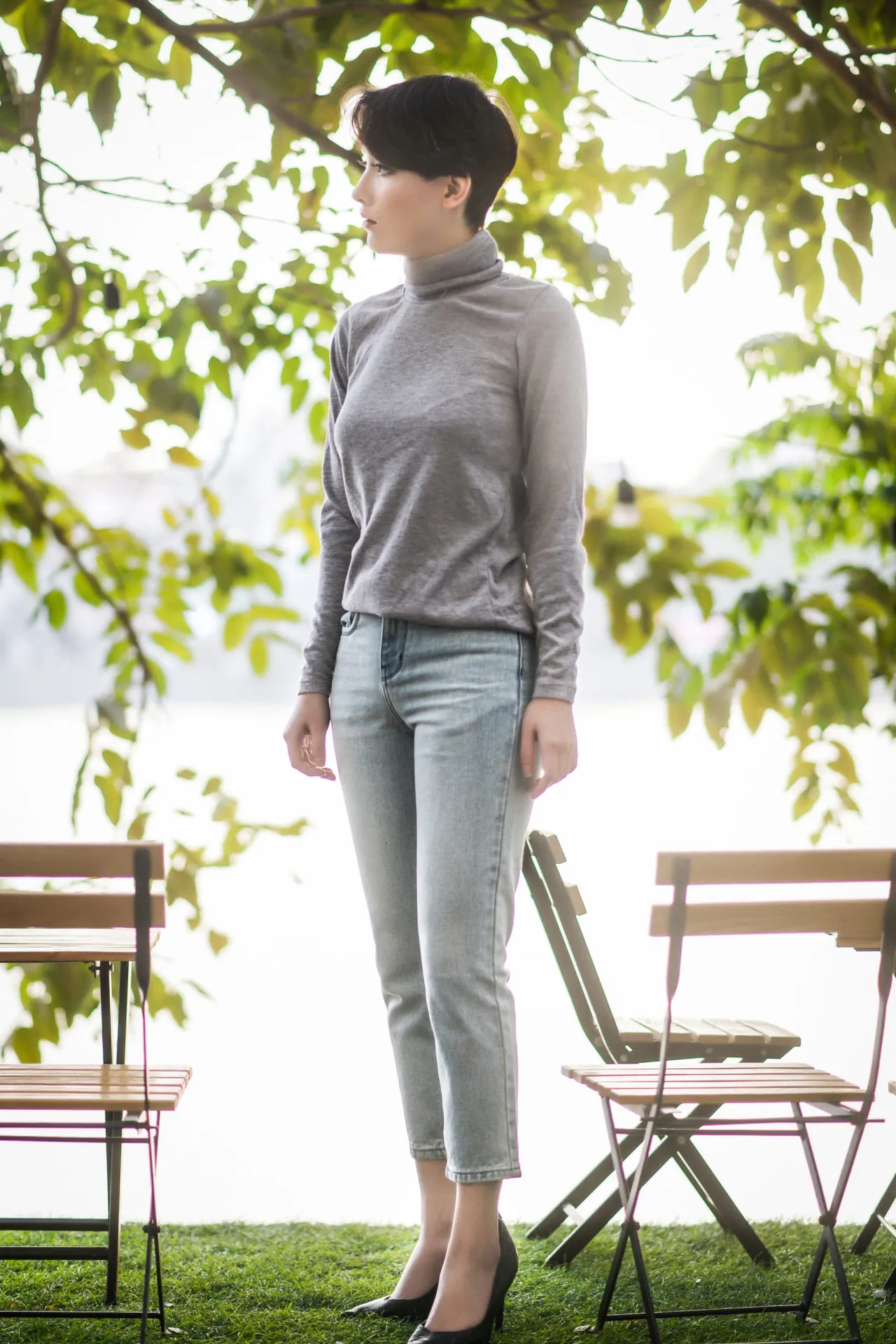
Mom jeans
Besides boyfriend and girlfriend jeans, you have probably heard a lot about mom jeans. Strictly, mom jeans are not a variation of boyfriend jeans, but their shape is similar, so people group them together. Mom jeans date back to the late 1980s and early 1990s, when mothers often chose jeans with a roomy crotch and high waist that made the seat look flatter and less eye-catching, for comfort. Mom jeans is the informal name for jeans with these features.
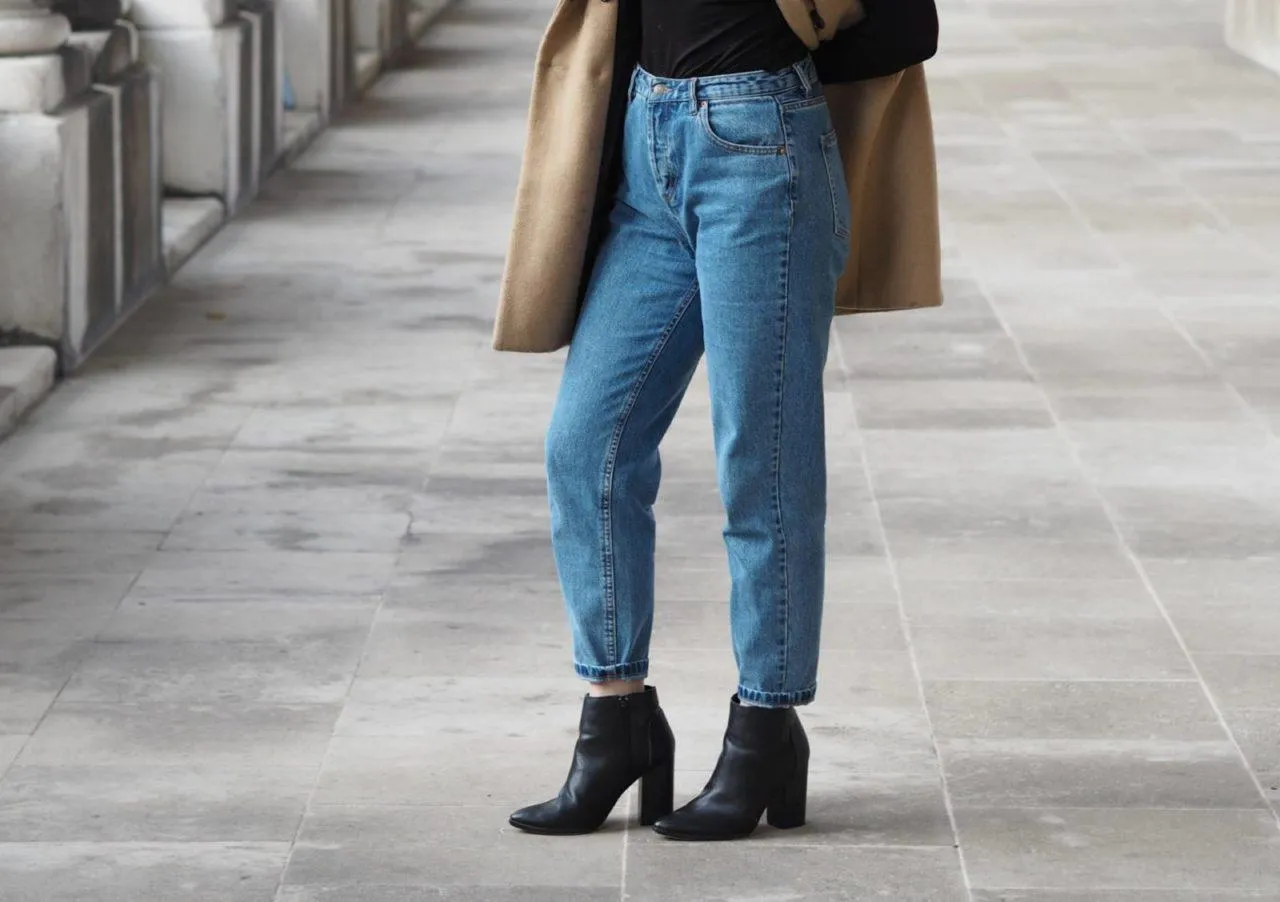
1.4 Flare and bootcut jeans
Flare jeans have made a comeback and are now very popular with women. Flares, also called bell-bottoms, have a shape close to a bell: flare jeans are straight from the hip to the knee and widen from the knee to the heel.
Flare jeans were influenced by sailors’ trousers in the 1850s, designed so sailors could easily pull them over their boots. Flares became popular among cowboys and labourers because they were comfortable and easy to wear over sturdy work boots.
In the 1960s and 70s, under the influence of hippie culture, flares were redesigned with a wider leg. By the 1980s they had become the bell shape we know today, then gradually fell out of favour. Around 1996, flares returned with a less pronounced flare under the new name bootcut. Manufacturers still distinguish between flare jeans and bootcut jeans; the main difference is the width of the leg opening.
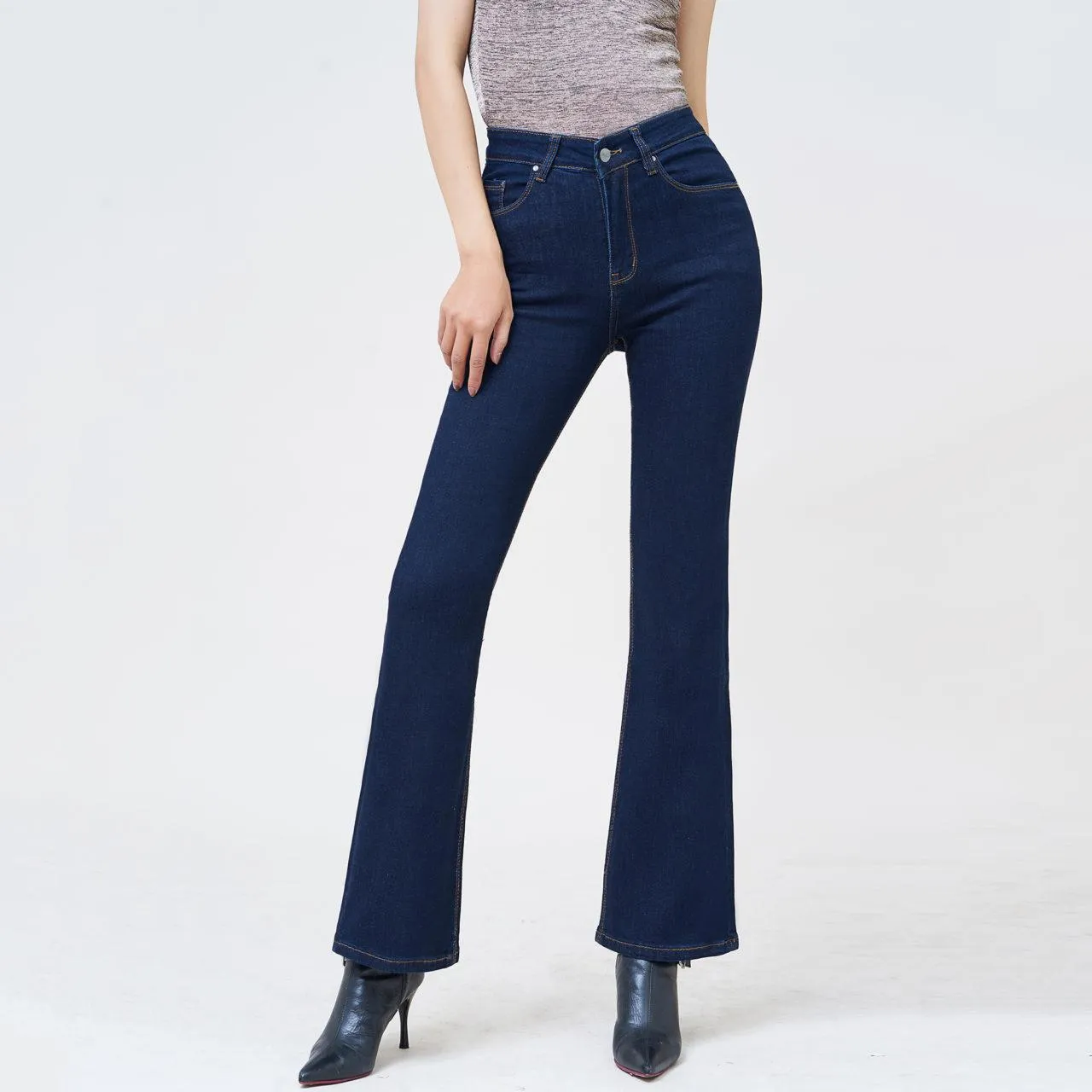
1.5 Wide-leg jeans
Besides skinny, boyfriend, straight-leg and flare, there is another long-established cut: wide-leg. Wide-leg jeans are also called women’s baggy jeans. They were popular from the 1990s to the mid-2000s, closely tied to the rise of hip-hop.
As high waists have come into fashion, styles such as high-rise baggy jeans and high-rise wide-leg jeans are very popular. Wide-leg jeans are roomy from the thigh down, with a leg that falls past the heel and may flare slightly. Some even cover the shoes and touch the ground. On average, the leg opening of wide-leg jeans is about 50 cm; on extra-wide styles, it can exceed 60 cm.
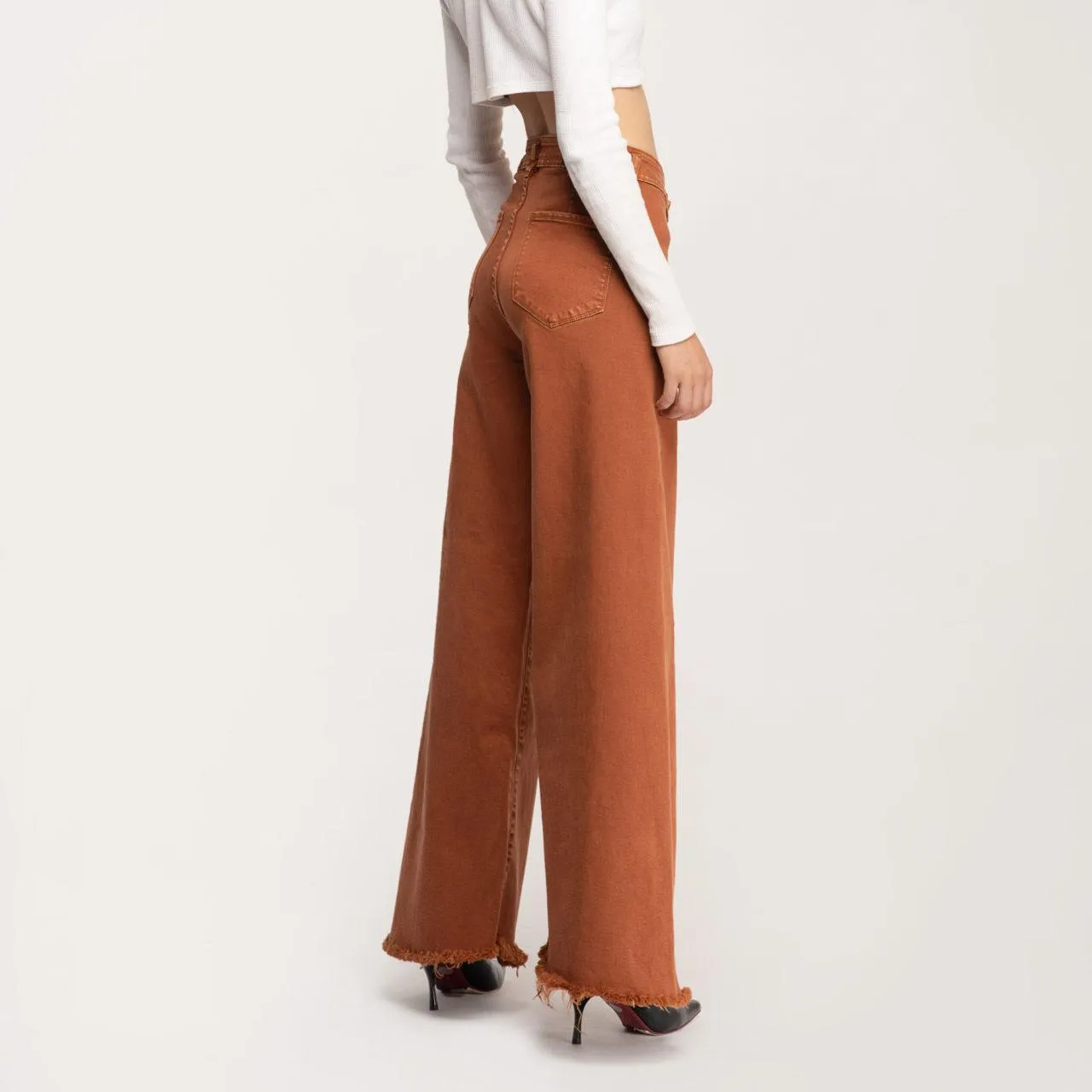
Wide-leg trousers have a long history, with styles changing over time. They became popular among Western nobility in the 16th–17th centuries, when they only reached the knee and were called breeches. In the 18th century, knee breeches were replaced by long wide-leg trousers, worn mainly for everyday work.
In the Middle East, wide-leg trousers also became everyday wear and part of traditional dress. In the early 20th century, wide-leg trousers became a symbol of rebellion at major universities such as Oxford and Cambridge. In the United States in the 1930s–1940s they were popular, and a favourite of gangsters because the wide legs made it easy to hide… weapons. In the 1950s they declined with the rise of skinny trousers, and in the 1980s, with the birth of hip-hop, wide-leg jeans became popular again, as rappers wanted to stand apart from the rockers who favoured skinny jeans. In the 1990s and early 2000s, wide-leg jeans were mainstream, cooling off in the mid-2000s. Recently they have drawn attention again and become a piece many young people want.
1.6 Denim shorts
When women’s denim shorts, or jean shorts, first appeared, there was only one style: cut-offs. Cut-off shorts (made by cutting down long jeans) became popular in the late 1960s, and even more so in the 1970s thanks to the TV series The Dukes of Hazzard, whose female lead wore shorts in every episode. By the 1980s, denim shorts had become a fashion icon and a must-have for many people. Men’s denim shorts also appeared at this time, with a slightly different length from women’s.
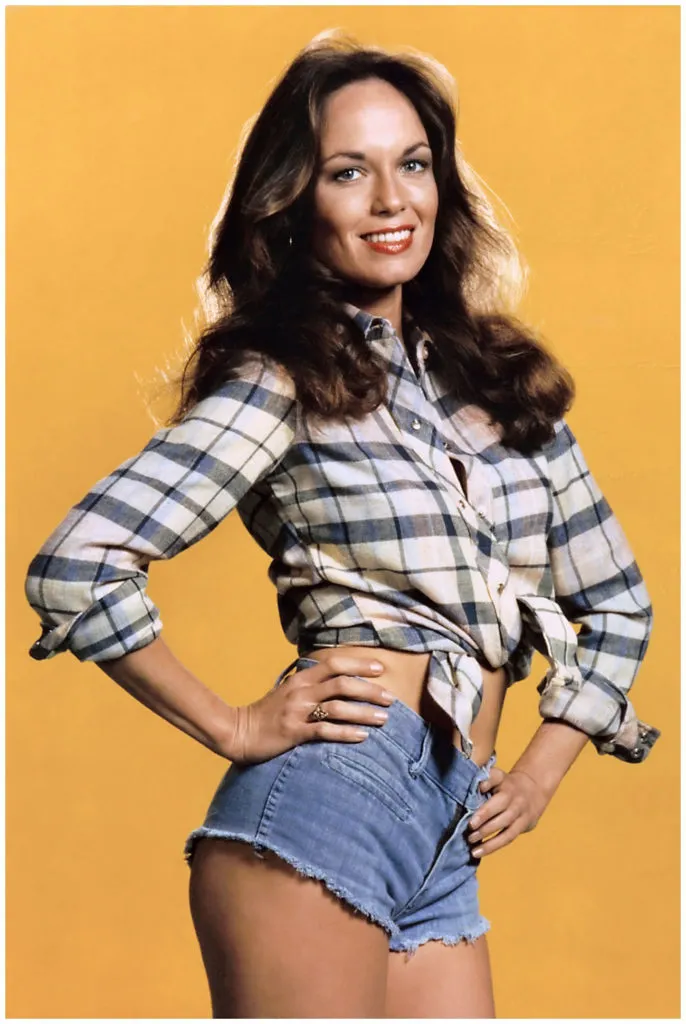
In the 1990s, denim shorts changed a lot, with many styles beyond simple cut-offs. They were no longer as short as before, and came in many different lengths. Capri-length jeans also appeared in this period.
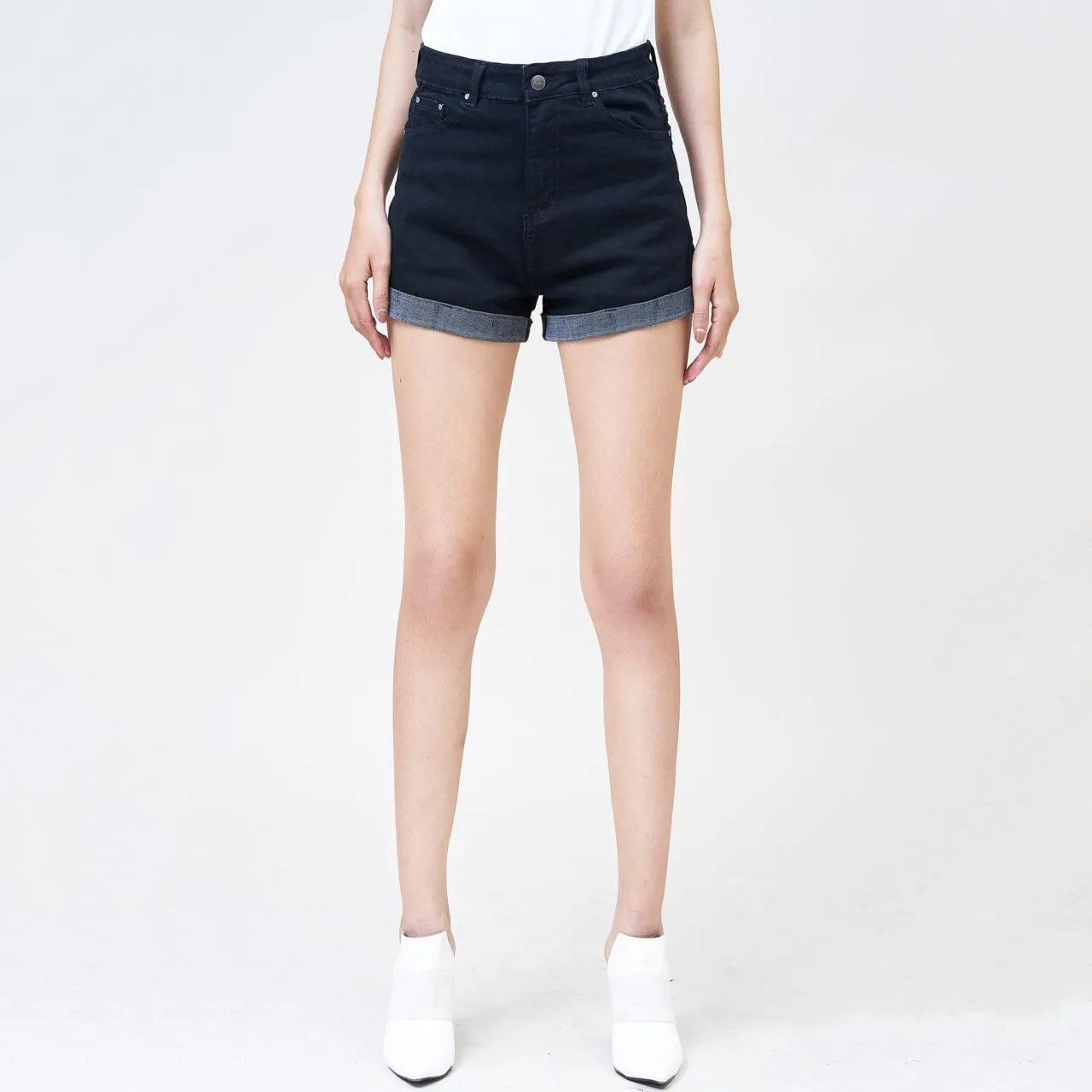
Today, denim shorts are one of the most common pieces. You can easily see mothers, daughters, young women and celebrities wearing denim shorts around town. Unlike long jeans, which usually started with men, denim shorts reached their status thanks to women themselves.
II. How to choose jeans
By now you know the types of jeans and probably which ones are already in your wardrobe. Want to know how to choose the right jeans? In this section, Aaa Jeans shares some general principles. For styling tips for each cut, see our series of styling articles for each type of jeans.
- How to style women’s skinny jeans
- How to style women’s straight-leg jeans
- How to style boyfriend jeans
- How to style flare jeans
- How to style wide-leg jeans
- How to style denim shorts
2.1 Choosing jeans by body shape
This is still a fairly new idea that not many people really understand. It is a long topic, so we have written a separate article on it. First, find out your body shape: pear, apple, rectangle and so on. Read the article Female Body Shapes, which includes a small quiz to help you find your shape. Then read “Choosing Jeans for 12 Body Shapes” to choose the jeans that suit you.
2.2 Choosing jeans for your hips
You have probably heard that jeans don’t look good without curvy hips, or that a flat bottom looks bad in jeans. That isn’t really true. In this section we share some principles for choosing jeans that suit your hips.
Jeans for fuller hips
Jeans easily show off fuller hips. If your hips are fuller and you’d rather play them down, avoid light colours, thin fabric and eye-catching details at the back. Black jeans or dark jeans without rips or details make the hips look neater and the legs slimmer.
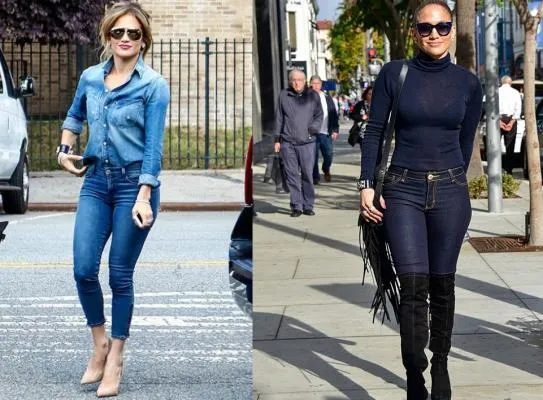
Once you have the right cut for your figure and hips, look at the back pockets. If you’d rather not emphasise your bottom, avoid flap pockets, which make the hips look bigger. Choose jeans with a simple back, without details, so the hips don’t stand out.
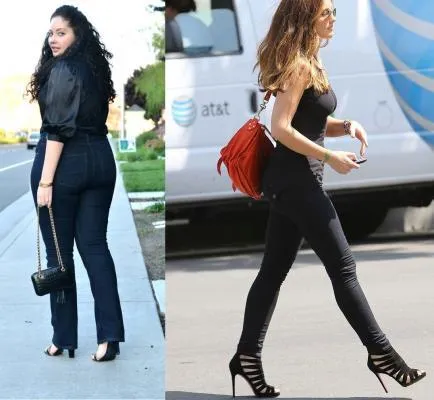
Limit low-rise jeans, which make the bottom look bigger. Very roomy boyfriend jeans are not a good choice either, as they look sloppy and make the hips look even bigger. If you like boyfriend jeans, choose a pair that isn’t too roomy. Skinny, straight-leg and flare jeans can all be good choices.
Jeans for a flat bottom
Unlike fuller hips you may want to play down, a flat bottom is something you might want to give more shape. The rule is simple: do the opposite of the above. Choose lighter jeans with details at the back, a moderate fit and a low or mid rise. Avoid very tight, dark jeans. Avoid high-rise jeans, which make the bottom look smaller. And avoid jeans without a yoke (we don’t like these much either; they don’t really look like jeans).

Jeans for wider hips
Women with an inverted triangle shape often have narrow hips and a small bottom, while women with wide hips need a different approach. If your hips are wide, very tight jeans are not ideal. Boyfriend or wide-leg jeans are good choices, as are flare or bootcut jeans. Skip tight, dark skinny jeans. Low-rise jeans highlight the waist and make the hips look smaller, while relaxed boyfriend and baggy jeans are comfortable and hide the hips completely. To make your legs look longer and slimmer, add heels with thin straps. This combination looks very attractive.

Jeans for a low or flat seat
If your seat is low, choose cuts that lift and shape the curve. They don’t have to be very tight: a slightly relaxed cut in high-rise jeans or mid-rise, with a few details on the pockets, is enough. The back pockets should sit right on the seat for a lifting effect. The fabric also matters: soft or thin fabric shows a low seat more, so choose thicker fabric that shapes the hips. And above all, say no to low-rise jeans.

2.3 Jeans for shorter women
If you are not sure which jeans to choose when you are not tall, the answer is simple: skinny jeans. They are popular because they are flattering and easy to wear. The golden rule is to choose cropped or moderate-length skinny jeans. Length matters: if your skinny jeans are too long and bunch at the ankle, they work against you. In that case, roll up the hems for a better look.
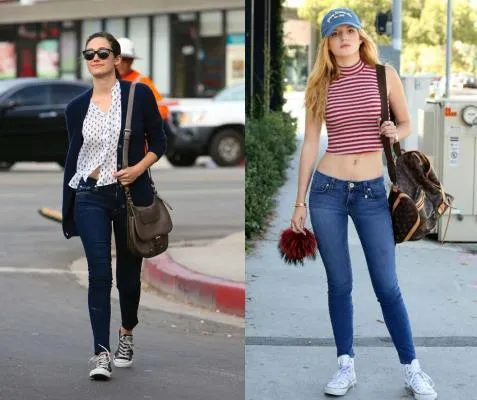
Besides skinny jeans, flare and bootcut jeans are also good choices. You can choose these past the heel, but always wear them with heels. If you don’t want to wear heels, choose cropped styles.
2.4 Jeans for a fuller figure
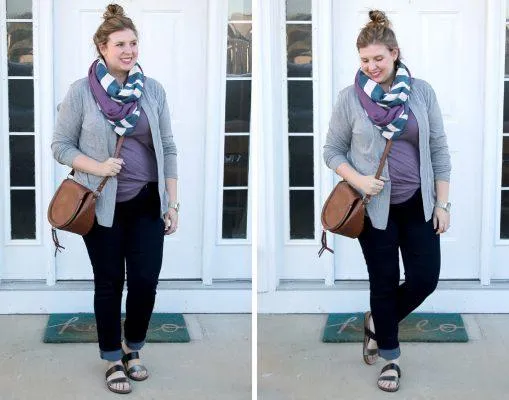
Straight-leg jeans
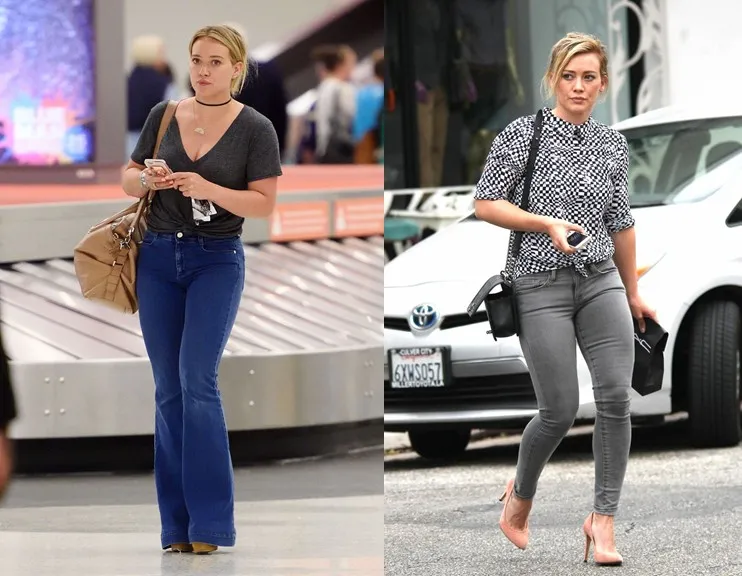
If you have a fuller figure, don’t hesitate to choose straight-leg jeans. Anyone can wear this cut, so it is a safe choice. Just choose a pair that fits the thigh moderately so it doesn’t look sloppy. Dark jeans in particular help play down the thighs and hips. Avoid white jeans, however feminine and stylish they may look.
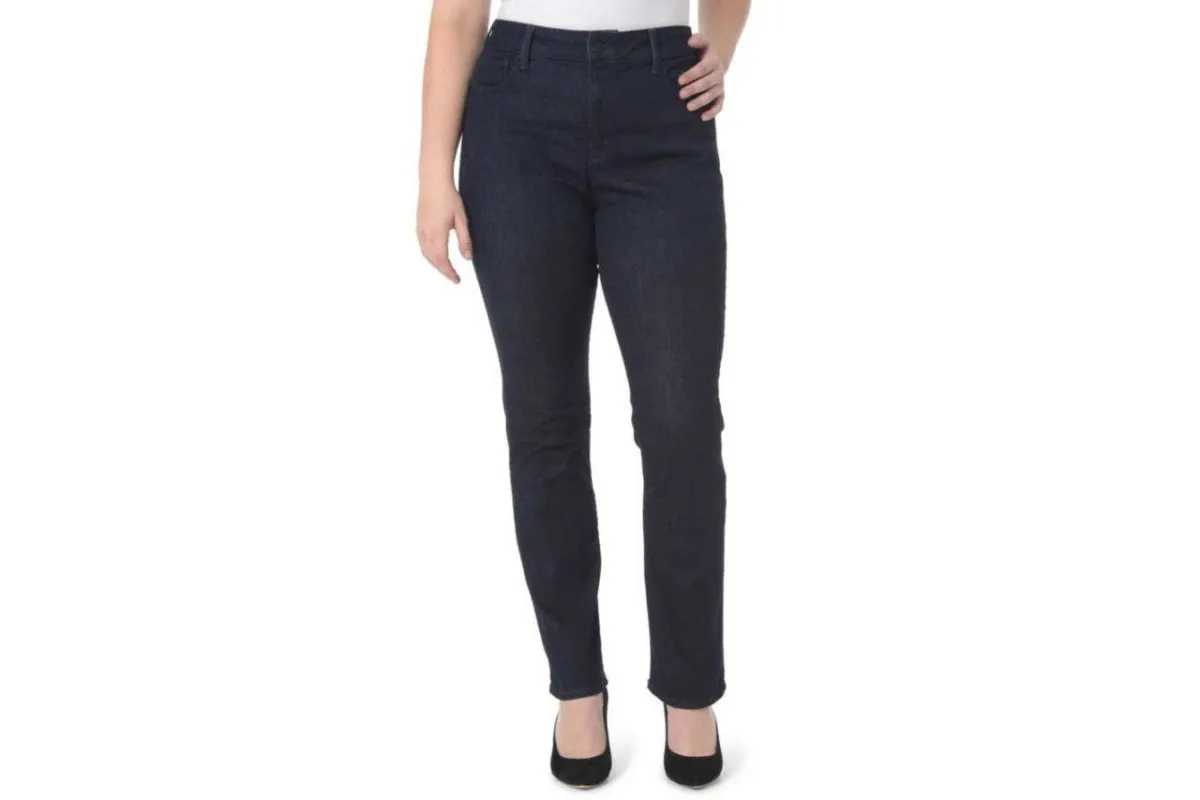
With straight-leg jeans, you can wear heeled shoes or sandals, or flats; flat sandals are the best choice.
Cropped jeans are also a great trick for looking slimmer. There is no fixed length for cropped jeans, so if your calves are fuller, choose an ankle-length crop to make your legs look longer and neater.
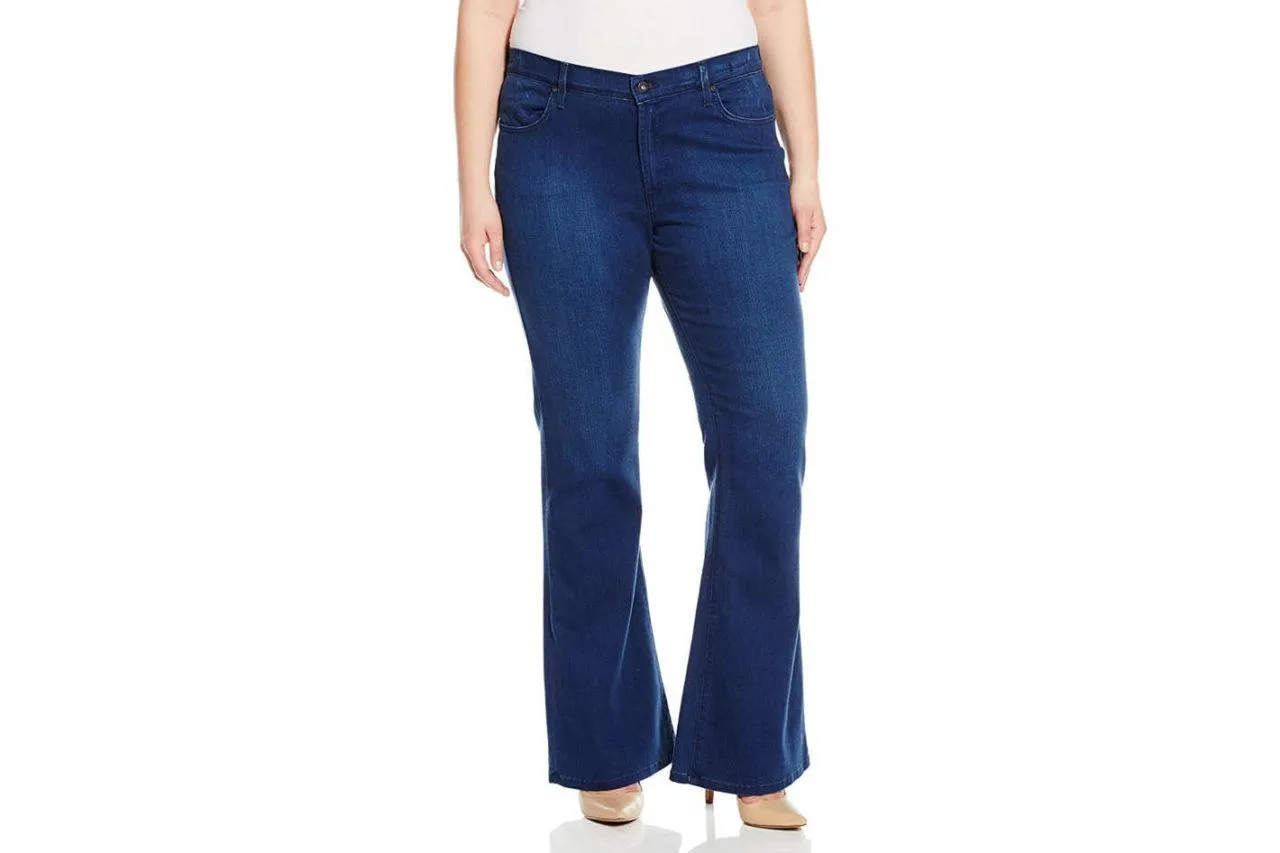
Flare jeans
If you want your legs to look slimmer and longer, choose bootcut or flare jeans. They also highlight full hips. The best length for bootcut or flare jeans covers half the heel of your shoes. Choose stretch fabric so they don’t look baggy.
Skinny jeans
You may wonder whether skinny jeans work. They certainly do. Just avoid light-coloured skinny jeans and very tight ones. Low-rise skinny jeans are not a good choice either. Choose plain jeans without details and without a heavy wash on the seat and thighs.
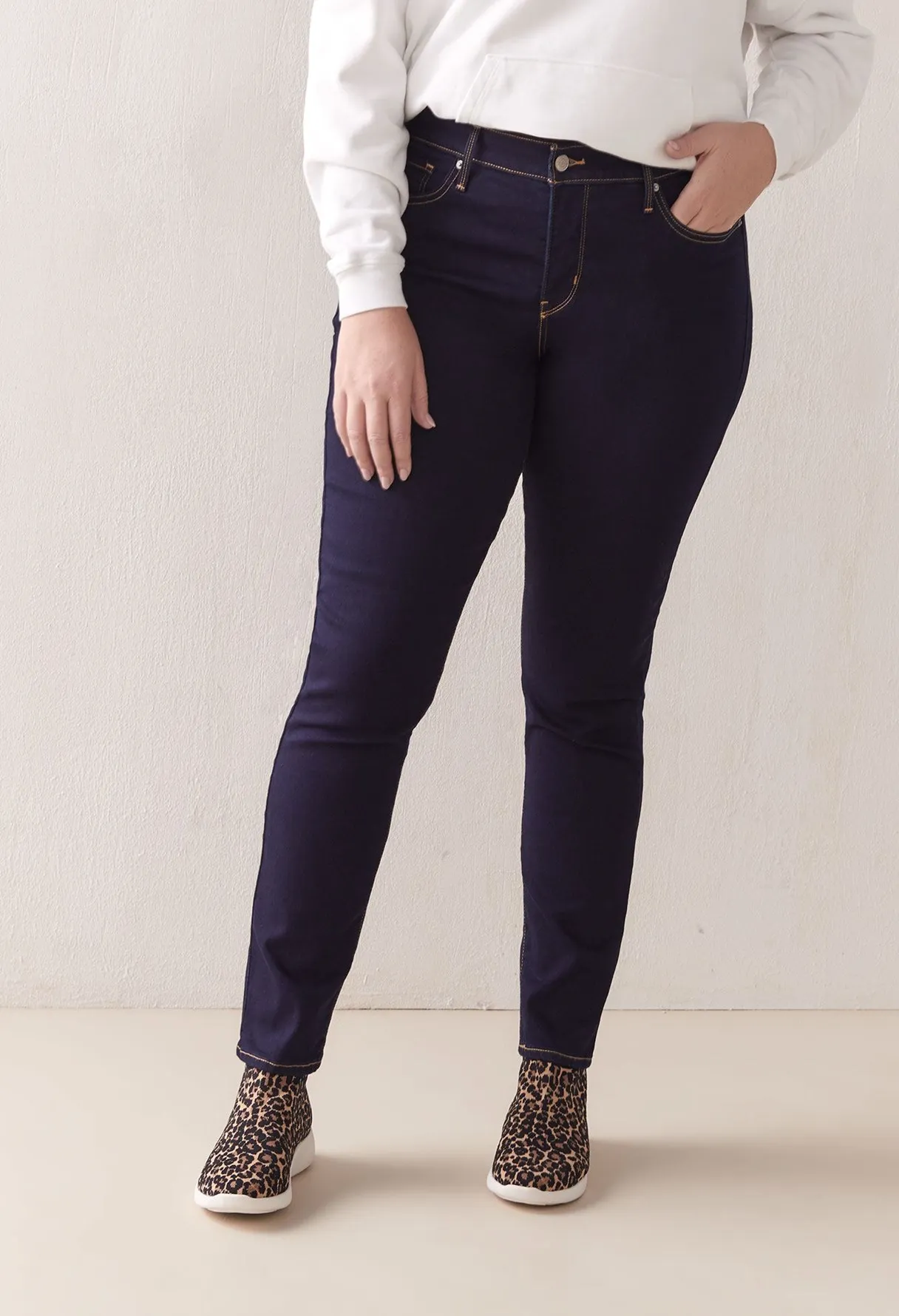 One more tip: if you choose skinny jeans, go for a high rise. High-rise jeans are very flattering, and if you have fuller legs and some tummy, a high rise holds the waist, smooths the tummy and makes the legs look longer. Add heels for an even better effect.
2.5 Jeans for petite women
The last part of this article is for petite women choosing jeans.
Choose skinny or straight-leg jeans
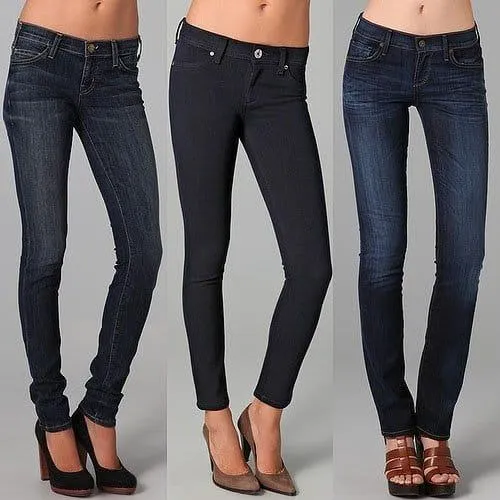
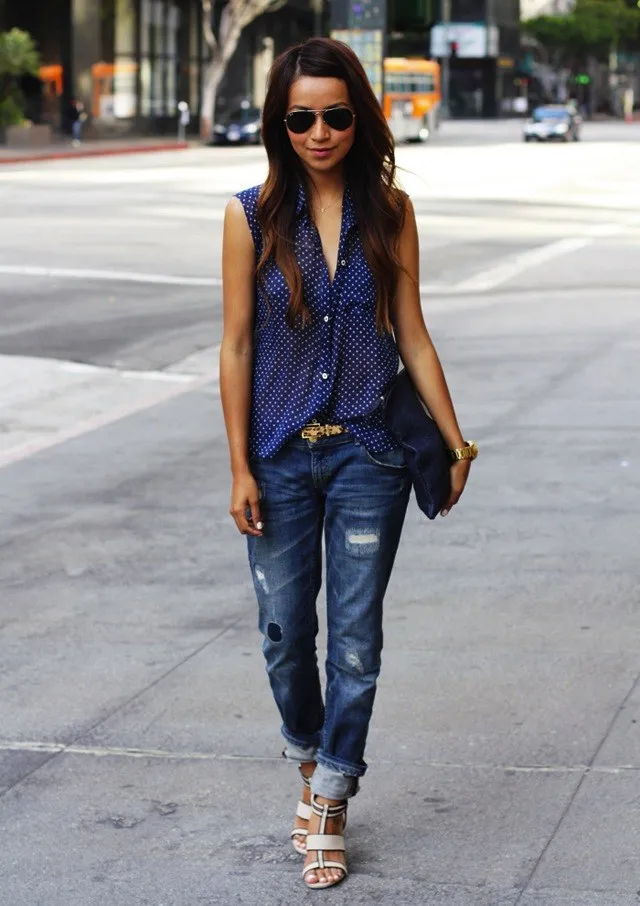 For petite women, skinny and straight-leg jeans are the top choice. Both suit every body shape, whether pear, apple or lollipop. Both follow the legs, making them look longer and slimmer and making you look taller overall.
Choose dark styles, ankle length, in stretch fabric.
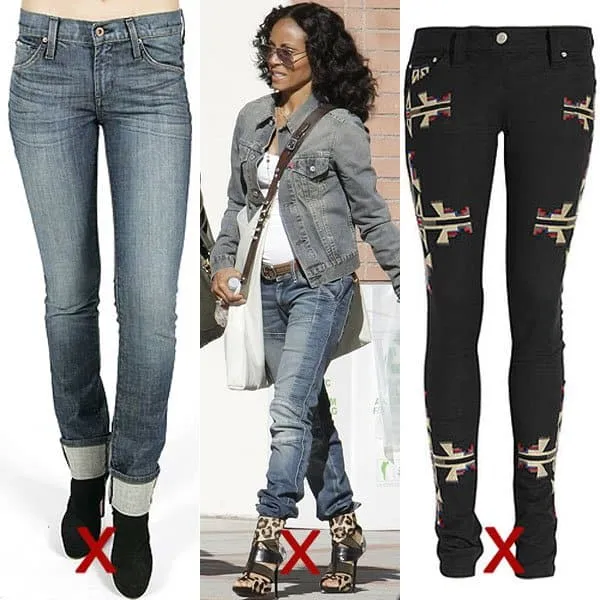
Avoid the following: long jeans with big rolled hems, jeans that are too long, or jeans with too many details.
Choose bootcut or flare jeans
Both cuts suit almost every body shape, with a small difference: bootcut jeans suit hourglass or apple shapes best, while flare jeans are a good choice for pear shapes.
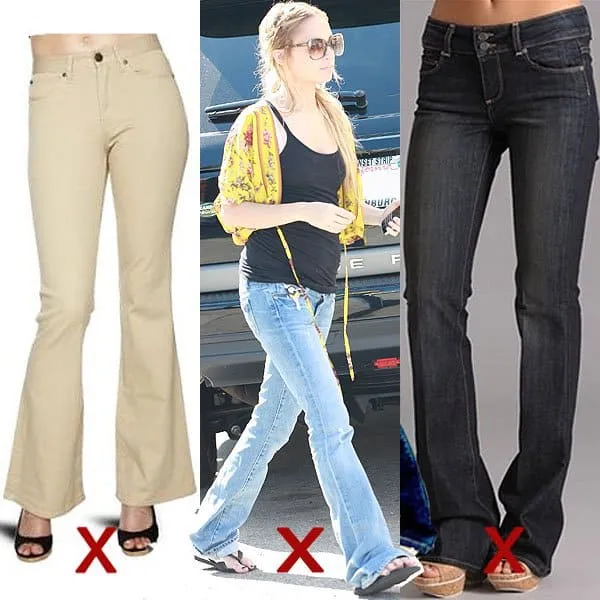
With bootcut jeans, choose dark colours and a moderate length. Avoid styles that are too long or too wide at the leg.

Avoid jeans with a very wide or very long leg, which make you look shorter and sloppy.
Flare jeans for petite women
You may think flare jeans don’t suit petite women, but there are plenty of ways to make them work.
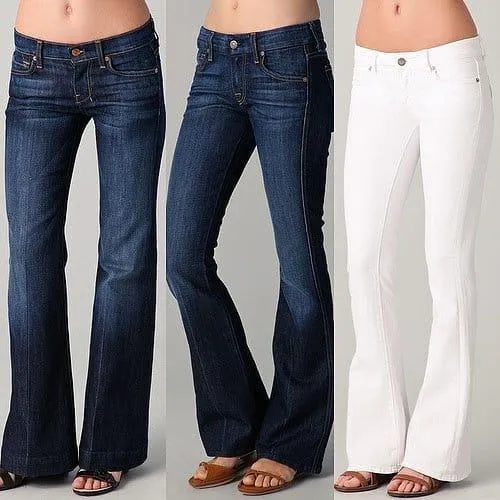
The rule for flares is the same as for bootcut: the leg opening should be narrower than your hips. If you are petite and wear a very wide flare, you risk looking a bit like a broom :). Then choose the right length: flares that are too long look much sloppier, and if you shorten them, they lose their original shape. They shouldn’t touch the ground, but should be long enough to cover your shoes. Cropped flares, or ankle-length flare jeans, are quite popular now. You can choose them to add a little height, just not too short.

Choosing boyfriend jeans for petite women
If you are petite with few curves, boyfriend jeans suit you. Choose boyfriend jeans with a slightly fitted cut that isn’t too roomy (girlfriend jeans are an option). Avoid boyfriend jeans with a wide leg, which make you look shorter. If they are too long, roll the hems above the ankle for a better look, but only with narrow-leg boyfriend jeans.
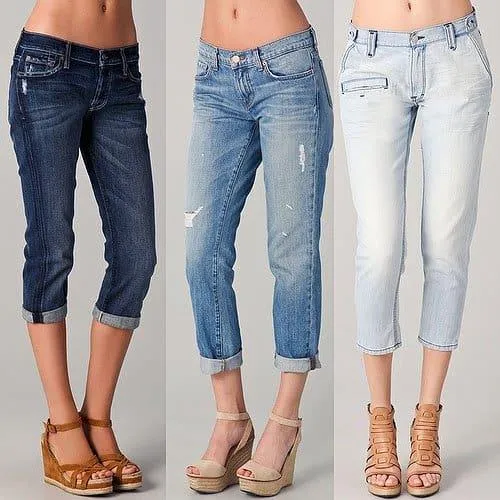
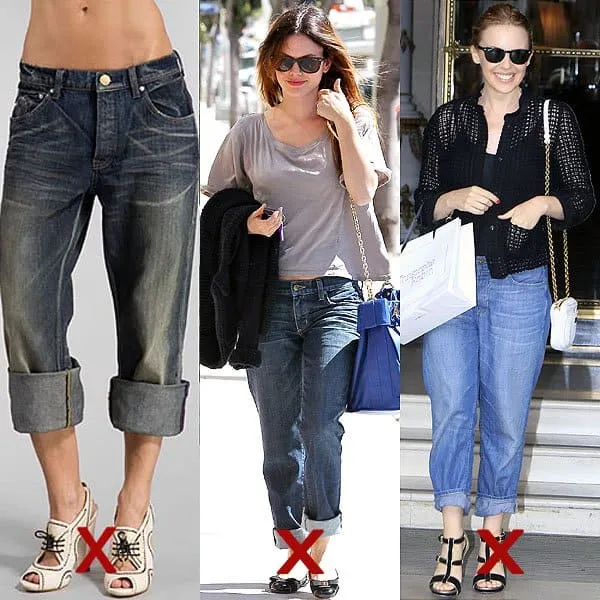
Petite women should not roll up wide-leg boyfriend or baggy jeans.
This article was a long one, and we hope you found it useful. If you have questions or comments, let us know. Thank you.

ad ơi, em đang ở tuổi phát triển nên cơ thể chưa hoàn toàn theo dáng nên chọn quần jean có hơi khó ấy ạ. Vai khá rộng, eo vừa, có đường cong, dáng em cao nhưng v3 nhỏ với phần đùi trên hơi lớn so với người thì là dáng như thế nào ạ?