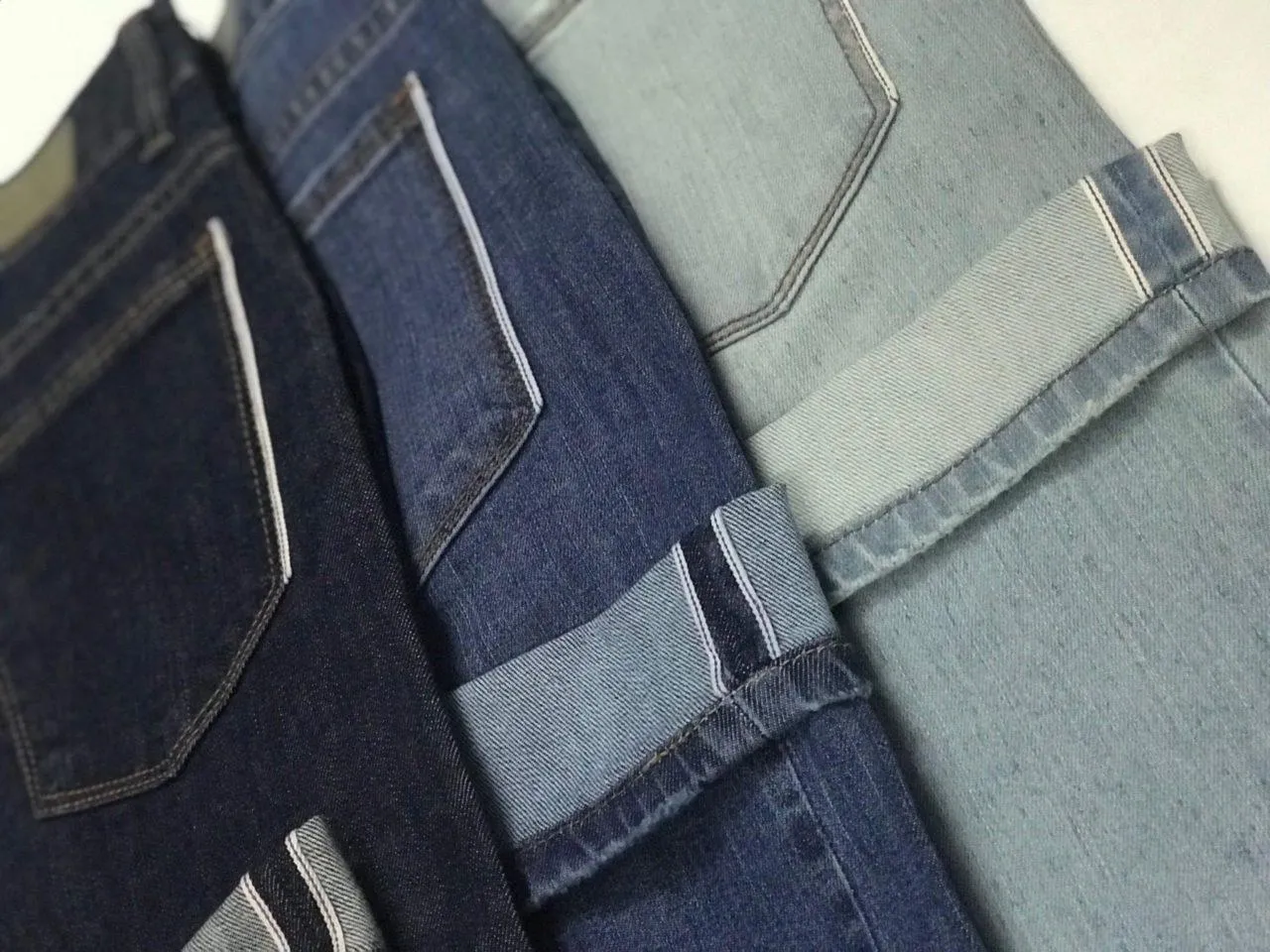
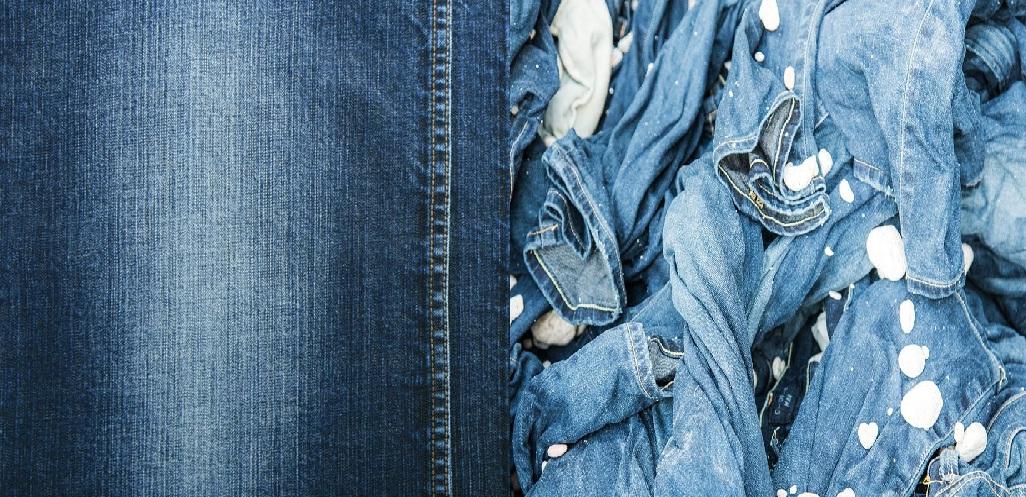
Washing is one of the last steps in making jeans. Once sewn, jeans are washed to soften the fabric and create different colours, fading, wear or rips, depending on the manufacturer’s design. As we explained in the article on denim production, manufacturers coat the warp yarns with size to make the fabric stronger, which makes raw denim stiff. Besides creating effects, washing makes the fabric softer and more comfortable to wear.
Benefits of washing jeans:
- It removes the size or starch from the fabric so it becomes softer. Fabric softener can also be added to make the jeans softer still.
- It removes dirt such as dust and other impurities picked up during production.
- For jeans made from stretch fabric, washing shrinks them fully, so they won’t shrink any further when you wear them.
- Washed jeans can be worn straight away, without washing them first.
- The wide range of fading, wear and rip effects gives jeans their variety. This is what sets jeans apart from other trousers.
Drawbacks of washing jeans:
- It changes the size of the jeans: jeans made from stretch fabric shrink after washing. Depending on the stretch, they can shrink by 1–3 sizes. For example, if the fabric shrinks by 2 sizes, a pair meant to be a size 26 after washing is sewn as a size 28. If the shrinkage is uneven, the fit is ruined.
- It affects the fabric, the thread and the quality of the jeans: because the size is completely removed, washed jeans are less durable than raw denim. How much the fabric and seams are affected depends on the washing method. Jeans can be washed in large industrial machines at temperatures up to about 80°C. To create wear and rips, stones are added to the wash; the stones rub against the jeans to create the worn look, which can also damage the stitching. And for jeans that shrink a lot, the seams may not stay straight, because the thread (which usually has little stretch) does not shrink at the same rate as the fabric.
There are many methods and technologies for washing jeans, divided into two main types: chemical washing and physical washing.
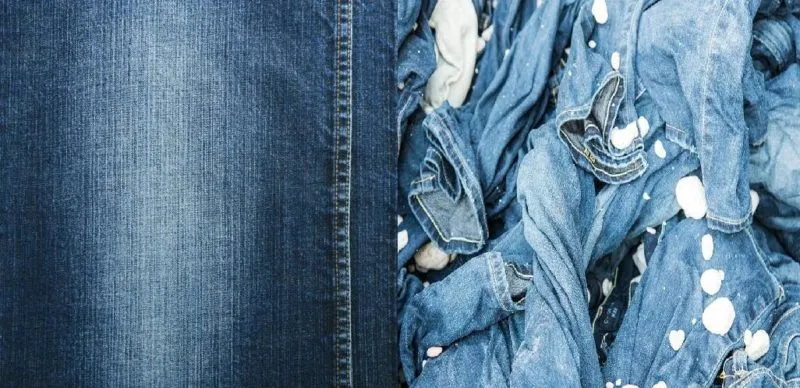
Chemical washing
Chemical washing is the most common way to wash jeans worldwide and is used by most jeans manufacturers.
Bleach washing
In this process, strong oxidising bleaches (for example KMnO4) are used to wash the jeans. Starting from the original colour of the denim, manufacturers bleach part of it away to reach the desired colour. The result depends on the strength of the bleach, the washing time and the temperature. Usually a strong bleach and a short washing time are used. Below are the 5 main steps in bleach washing.
a jeans washing machine
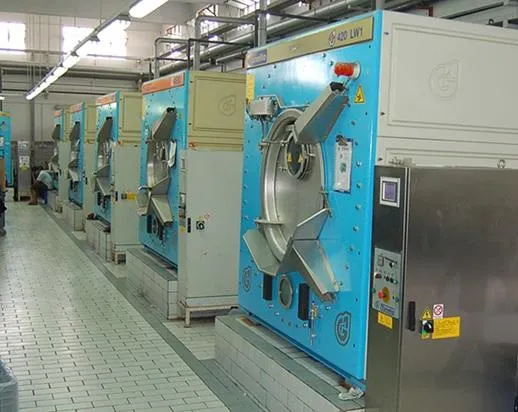
Step 1: Desizing
- Load the jeans into the machine (about 100 kg of jeans per load)
- Add water in proportion (for example 1:5, or 5 litres of water per 1 kg of jeans) and run the machine at 12–15 rpm
- Add a catalyst (about 3 kg)
- Add detergent (about 1 kg)
- Bring the water to about 60°C
- Wash for about 20 minutes, then drain
- Rinse with hot water (40–50°C) for 5 minutes
Step 2: Bleaching
- Add water at a ratio of 1:5
- Run the machine (12–15 rpm) and add soda (about 2 kg of Na2CO3)
- Add caustic soda (NaOH), about 2 kg
- Add bleach (H2O2) at 5 ml per litre of water
- Add a stabiliser at 2 ml per litre of water
- Raise the temperature to 70–80°C
- Keep this up for about 60–70 minutes, then drain
- Rinse with hot water (about 50°C)
Step 3: Neutralising
- Add water in the same proportion
- Run the machine at 12–15 rpm
- Add acetic acid (CH3COOH) at 1–2 ml per litre of water
- Run for about 10–15 minutes, then drain
Step 4: Brightening
- Add water at a ratio of 1:5
- Add an optical brightener (a fluorine compound) in the amount needed for the desired brightness
- Raise the temperature to 80°C
- Wash for about 10 minutes, then drain
Step 5: Softening
- Add water at a ratio of 1:5
- Run the machine at 12–15 rpm
- Add fabric softener (100–500 g per 100 kg of jeans)
- Set the temperature to about 40–60°C, run for 5 minutes, drain, and then the jeans can be taken out of the machine.
Drawbacks of bleach washing:
The process is hard to control, because the result depends on the amount of bleach, the machine speed and the water temperature. It almost never gives exactly the same result twice.
Once the colour is right, there is very little time to stop the machine; any delay changes the colour. Strong bleach also weakens the fabric and the stitching.
It pollutes the environment and can affect health
Dechlorination is required.
Enzyme washing
This is an environmentally friendly method. The process is similar to bleach washing, but instead of bleach it uses organic enzymes (from bacteria) that break down the cellulose in the fabric. When the jeans reach the desired colour, the manufacturer raises the temperature or changes the alkalinity in the machine to stop the enzymes. Enzyme washing usually has a smaller capacity, about 30–40 pairs per load.
Acid washing
Raw jeans (raw denim) are tumbled with pumice stones that have been soaked in bleach (hypochlorite) or potassium permanganate. Where the stones touch the fabric, the colour is bleached. This method usually produces an uneven faded look. Its advantage is that it uses less water than bleach washing.
Pumice stones
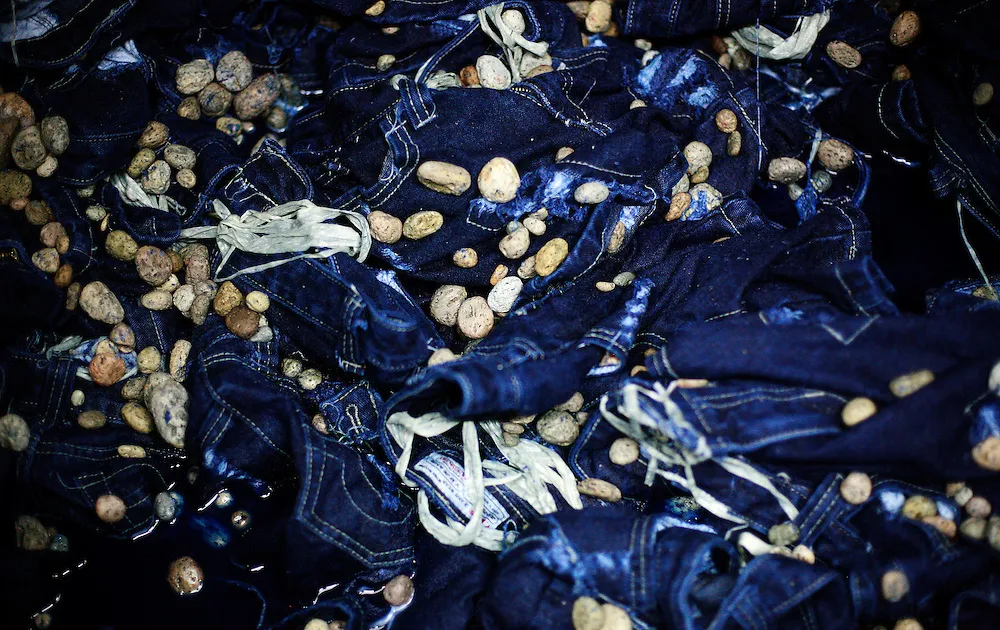
The process
The process is almost the same as bleach washing; the only difference is the bleaching step:
Manufacturers prepare bleaching stones, with the amount of pumice depending on the weight of the load. The pumice is soaked for about 2–3 minutes in a solution of 100 litres of water, 1 kg of potassium permanganate (KMnO4) and 300 ml of phosphoric acid (H3PO4), then air-dried for about 60–90 minutes.
After desizing, the jeans are divided into batches of 20–30 kg and put into a tumble dryer with the bleaching stones. The number of stones depends on the colour the manufacturer wants. The dryer runs for about 5–7 minutes, during which the stones rub against the jeans to create natural abrasion, and oxidation-reduction reactions where the stones touch the fabric create the faded pattern.
After the dryer stops, the jeans are separated from the stones and go on to neutralising, brightening and softening.
Drawbacks of acid washing
The original indigo tends to turn yellowish if neutralising is not complete. To prevent this, ethylenediaminetetraacetic acid (C10H16N2O8) can be used to bind the manganese (Mn).
Physical washing methods.
Stone washing
In this method, jeans that have just been chemically washed are put into large machines with pumice stones to soften them and create the designed wear. Stones differ in composition, porosity, hardness, shape and size, which gives them different uses. Pumice usually creates fading and wear because it abrades the surface of the jeans.
Stone washing follows the same process as bleach washing, except that in step 2, “bleaching”, a large amount of stones is added to the machine with the jeans. Usually the stones weigh about half as much as the load of jeans.
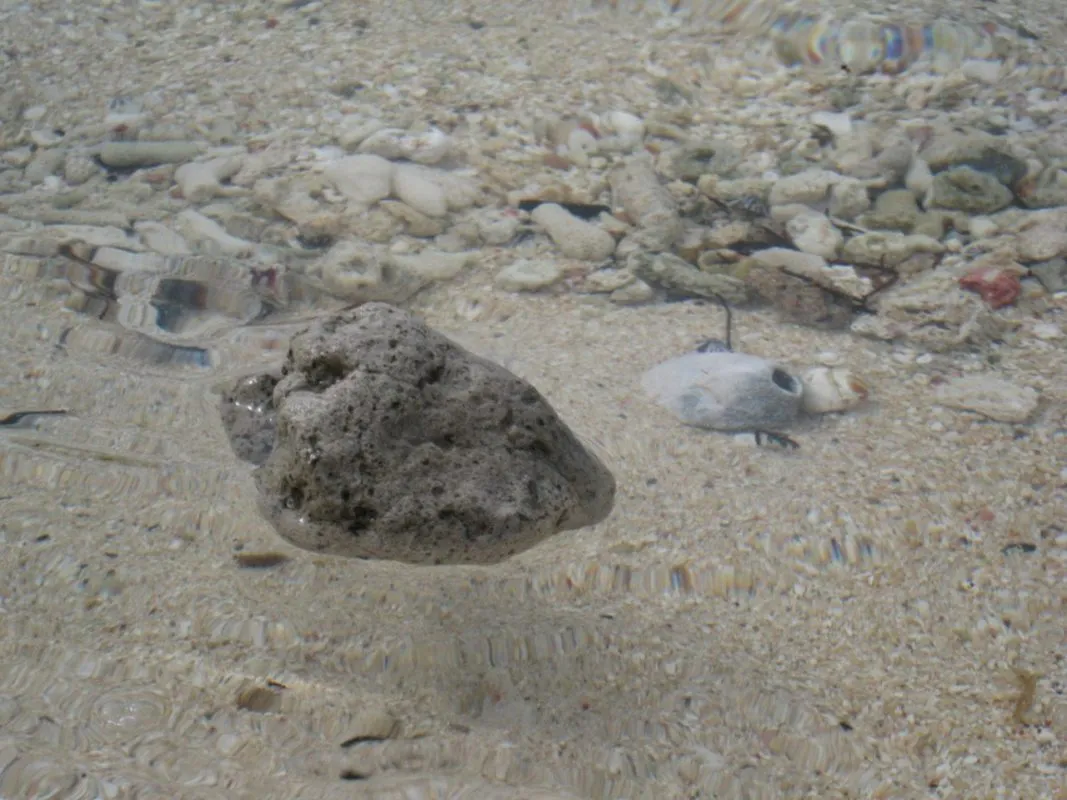
Pumice is volcanic rock. It is light and very porous and can float on water. Countries with plenty of pumice include the United States, Turkey, Japan, Indonesia and the Philippines. Pumice is an important part of stone washing garments: it abrades the surface of the fabric to create contrasting colours and makes the fabric softer. Pumice used for washing is usually 1–7 cm in diameter.
Pumice floating on water
Drawbacks of stone washing:
- The stones damage both the machines and the jeans by rubbing against them.
- Quality is hard to control: jeans in the same load come out looking different, and some are ruined by too much abrasion
Sandblasting
In this method, sand is used to abrade the jeans. Manufacturers spray sand onto the jeans with a sandblasting gun; the jeans hang on a machine that rotates the areas to be faded towards the blaster, or, with simpler equipment, workers turn the jeans by hand. It is a purely physical method that uses no chemicals, no water and no drying. Each pair is laid on a table and an air compressor with a pressure of about 3–4 kg/cm² is used. Silica sand (Al2(SiO4)3) is fed into the compressor’s tank and sprayed directly onto the jeans, usually at an angle of 10–20 degrees. The air and sand hit the chosen areas to create fading, wear or rips, and the operator can adjust the intensity to create different looks.
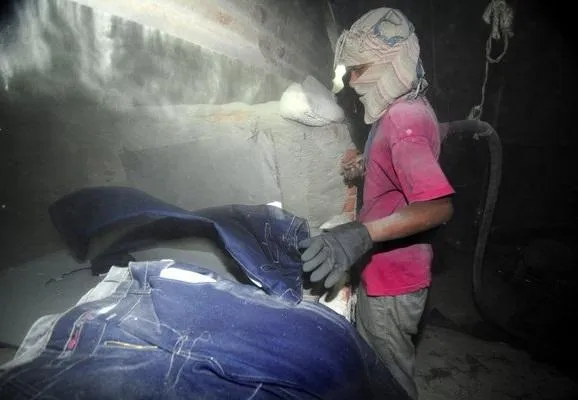
This method seriously harms workers’ health. Some factories use aluminium oxide powder instead of sand. Because it is so harmful, many countries have banned it. Sandblasting is still used by some factories in China and Bangladesh to produce low-priced jeans.
Related articles
How jeans are designed, cut and sewn
Quality control and finishing