
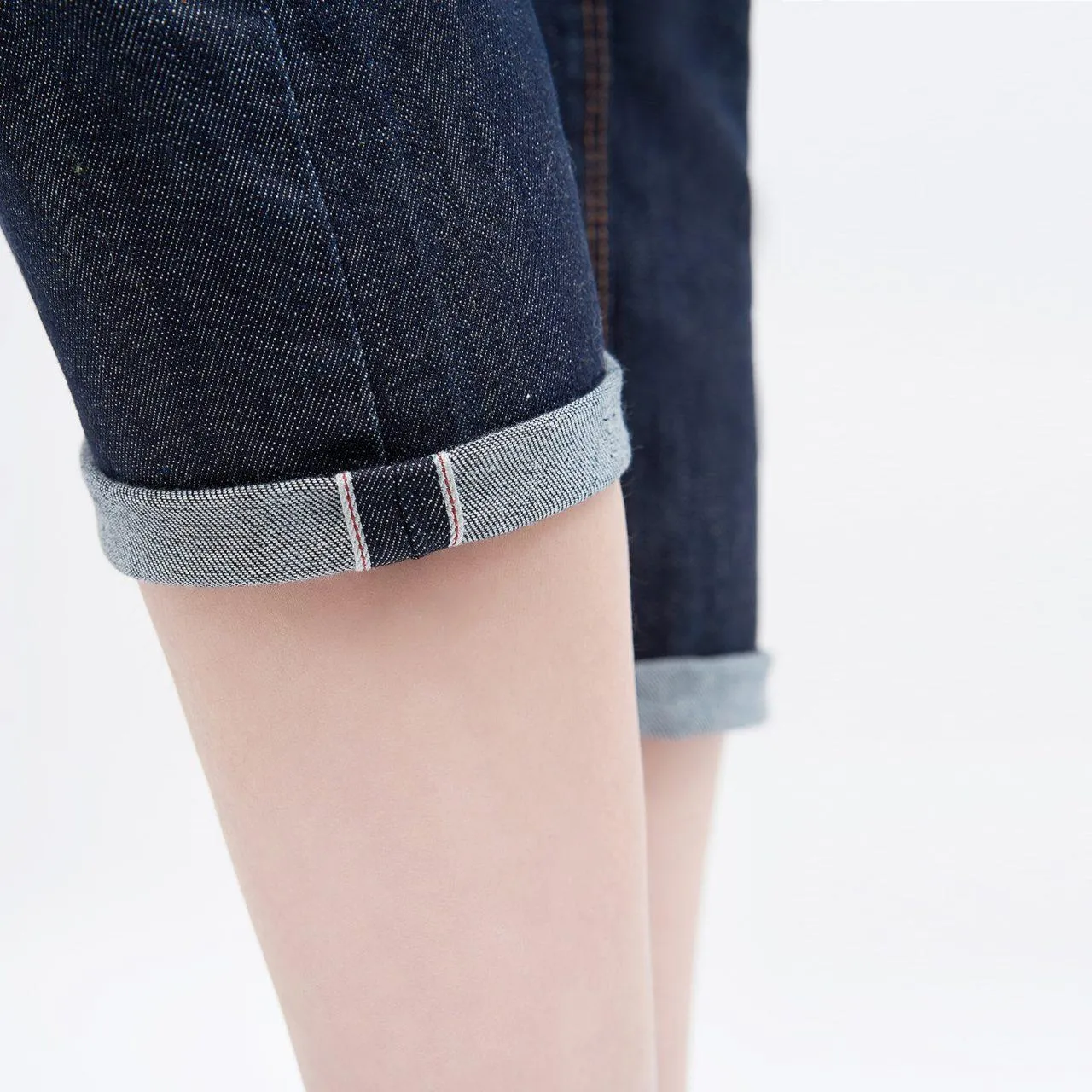
Aaa Jeans launched the UCSD Selvedge line, made entirely from selvedge denim, as the top tier of the UCSD – Ultimate Collection of Special Denim collection. Selvedge denim has existed for a very long time but has only recently drawn attention and reached Vietnam. In this article we take a closer look at this special fabric.

What is selvedge denim?
Selvedge denim is denim woven with a clean, self-finished edge. The word selvedge comes from “self-edge”, which roughly means denim whose edge is closed off by the weave itself. Still a bit unclear? To understand it better, we need to look at how fabric is woven.
By the edge of the fabric, denim can be divided into selvedge and non-selvedge denim, that is, denim with a woven edge and regular denim.

Denim is woven mainly from cotton yarn, with warp and weft threads interlaced like many other fabrics, and the way the weft is woven is what separates selvedge from non-selvedge denim. Regular denim is woven on shuttle-less looms. There are many kinds of shuttle-less loom, such as air jet, rapier or projectile, which we won’t go into here. What they have in common is a wide fabric, fast weaving and high output, and in the finished denim the weft threads are cut at the edge after crossing the full width. Selvedge denim is woven on shuttle looms. A shuttle carries the weft back and forth between the warp threads; when it reaches the edge it turns back, so the weft is one continuous thread and is not cut as on shuttle-less looms, which is where the name selvedge comes from. Shuttle weaving can be done by hand or by machine, but it always means a narrow fabric and low output, and therefore a higher cost. Hand shuttle weaving is still common in Vietnam: traditional weaving villages still use it, and the familiar brocade (thổ cẩm) is woven this way.

When did selvedge denim appear?
When denim first appeared, it was all selvedge because it was shuttle-woven. Before the 1950s, jeans were usually made from selvedge denim and were not washed (known as raw denim). But as jeans became popular and demand grew, traditional shuttle weaving could not keep up, and its high cost pushed manufacturers to look for cheaper, faster ways to produce denim. Shuttle-less weaving, with higher output and lower cost, was the answer. Selvedge denim gradually declined and was almost forgotten, except in Japan. Selvedge denim originated in the United States, and after World War II many selvedge jeans were exported to Japan, where customers loved them. This led many Japanese companies to research and produce the fabric for the home market. Over the years Japan became known for selvedge denim made the traditional way, on old machines, but with fabric quality among the finest in the world. While most large mills switched from shuttle to shuttle-less weaving, Japanese workshops kept the traditional method, which helped build the reputation of Japanese selvedge denim.
Why has selvedge denim become popular in recent years?
The answer is fashion. Fashion is sometimes something entirely new, sometimes a variation on something existing, and sometimes a revival of the past. The recent popularity of selvedge denim is the third case. Selvedge denim represents the early history of jeans, and combined with the raw denim trend, selvedge and raw became a new movement. Selvedge and raw denim also fit a more environmentally friendly approach: selvedge jeans are usually raw, meaning the fabric is left unwashed, which saves water and avoids wastewater.

Why do selvedge jeans cost more?
In fact, the price per metre of selvedge and non-selvedge denim is not very different. The biggest difference is the fabric width and how it is cut.

Selvedge denim is only about half as wide as non-selvedge denim, so one pair of jeans takes about 1 metre of regular denim but nearly 3 metres of selvedge denim. In other words, the fabric for a selvedge pair costs almost three times as much.
You may wonder why a fabric half as wide needs almost three times as much. The answer lies in the cutting: with selvedge, the most important thing is to keep the edge, which wastes more fabric. Keeping the edge also makes cutting more complex and labour-intensive. And because the edge must be kept, women’s jeans in selvedge denim need straight leg panels, so only cuts such as straight-leg jeans and boyfriend jeans are possible, not close-fitting skinny jeans.