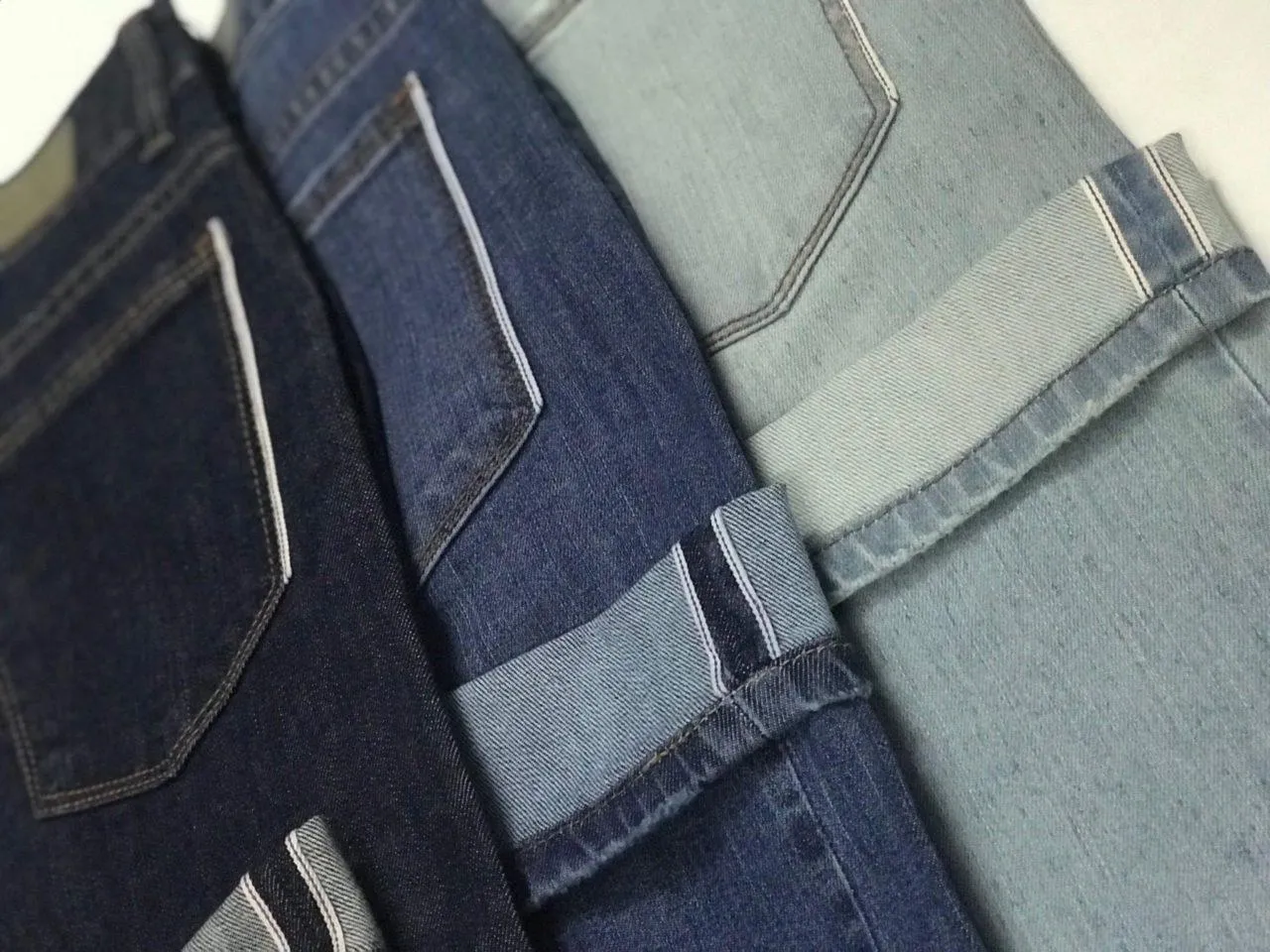
Making yarn for denim involves four main stages: spinning, dyeing, sizing and weaving.
1. Spinning
2. Dyeing
3. Sizing
4. Weaving
1. Cotton processing and spinning
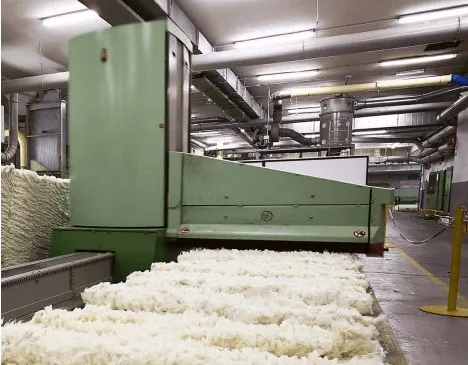
The main raw material of denim is cotton. When denim first appeared it was 100% cotton; today non-stretch denim is still usually 100% cotton, and while stretch denim is not 100% cotton, cotton still makes up most of it. Raw cotton from the field or from suppliers is usually packed into bales and shipped to the mill. There it is opened and carded to remove impurities, then spun into fine yarn. There are two common spinning methods: rotor spinning and ring spinning.
.Rotor spinning, also called open-end (OE) spinning
This used to be the most widely used method for denim. It produces yarn of moderate or lower quality, because the fibres vary in length and are not evenly arranged. Rotor spinning involves these main steps:
- Cleaning: impurities and seeds left in the raw cotton are removed.
- Blending: cotton from different sources is mixed evenly into loose tufts.
- Carding: the tufts are combed into small slivers with fibres of equal length laid parallel. Fibres that are too short are removed.
- Spinning: the carded slivers go to the spinning machine, where the cotton is spun into yarn. The twist, thickness, weight and evenness of the yarn are set according to production needs. The yarn comes out of the machine’s delivery tube and is wound onto bobbins.
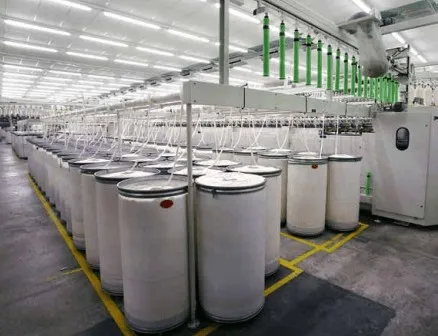
Today this is the most common method for denim yarn. It has a higher output and produces softer, stronger yarn than rotor spinning. Ring-spun yarn is longer and more even in quality.
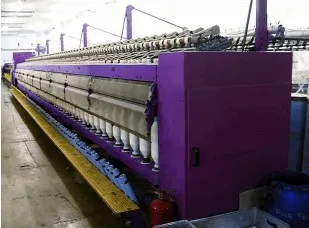
Besides the same steps as rotor spinning, ring spinning includes:
- Drawing: cotton from different sources is combined evenly, the fibres become more parallel and the slivers thinner
- Spinning: unlike rotor spinning, the yarn doesn’t come out of a delivery tube. Instead, the slivers go into a high-speed drafting system, then onto the spinning rings, and finally the finished yarn is wound onto bobbins.
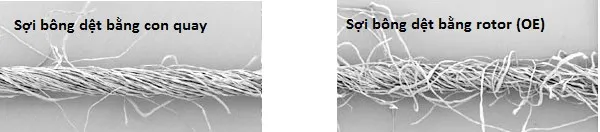
Below is a magnified view of yarn spun by the two methods.
2. Dyeing
Once spun, the yarn is dyed. Dyed yarn is used for the warp of the denim, while undyed yarn is used for the weft. Dyeing usually involves three steps: arranging the yarn, pre-treatment and dyeing.
1. Arranging the yarn for dyeing
There are two common ways to arrange yarn for dyeing: rope dyeing and sheet (slasher) dyeing.
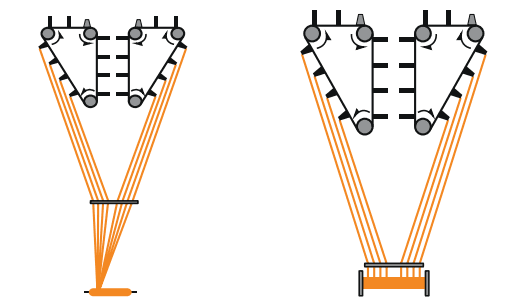
In rope dyeing, the warp yarns are gathered into large ropes of 300–400 yarns. Depending on the machine, up to nearly 20,000 yarns can be dyed at once.
In sheet dyeing, the warp yarns are laid parallel about 1 mm apart on a flat plane called a sheet. Each sheet holds about 300–750 yarns, and depending on the mill’s capacity, up to 10,000 warp yarns can be arranged.
2. Pre-treatment
- Wetting: the cotton yarn must be wetted evenly, otherwise the dyed colour will be uneven. Mills use special wetting agents or steam.
- Scouring: this removes impurities such as oils, organic matter, waxes or heavy metals, which can affect later dyeing steps. Mills usually use alkaline detergents.
- Mercerising: this changes the crystalline structure of the cotton, making it more absorbent and easier to dye. It also shrinks the cotton slightly and makes it stronger. Mills use a strong alkali for 30–60 seconds.
3. Dyeing
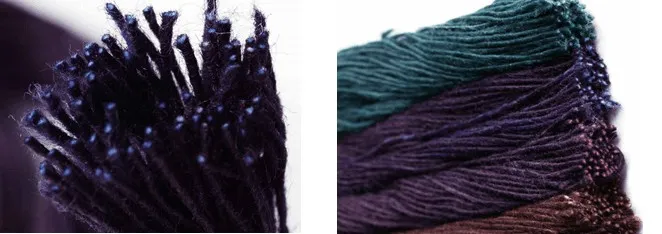
For more than a century, indigo has been the main dye for denim, and the colour and chemistry used have not changed much. But to meet demand for more colours, sulphur dyes came into use in the 1990s. In denim production, indigo is still the most common colour, followed by black, then less common colours such as olive, burgundy and brown.
– Dyeing with traditional indigo
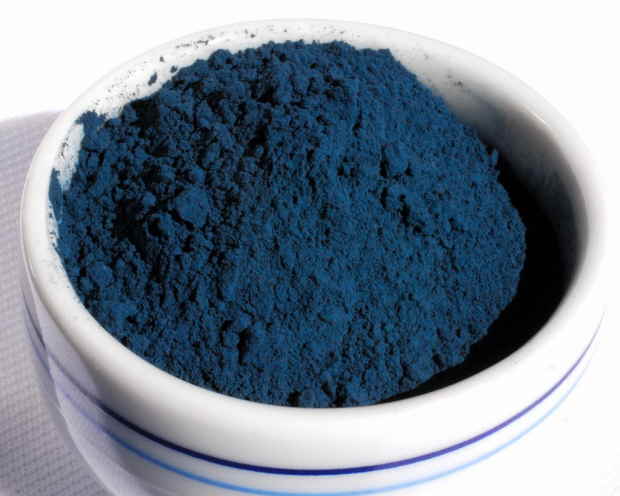
Dyeing with traditional indigo involves three steps: wetting the yarn, dyeing in the dye bath and rinsing in the wash bath. The yarn is dipped repeatedly and then exposed to the air so the dye oxidises naturally. Under normal conditions, indigo powder does not dissolve, so an alkali is added to the dye bath to dissolve it and let it soak into the yarn. When exposed to the air, the dye oxidises and stays inside the yarn, giving it its colour.
This method uses a dye bath with a low concentration of dye and a high concentration of alkali, and oxidation happens quickly, so the colour is usually light and the dye does not penetrate deeply. To reach the desired colour, the process is usually repeated 4–12 times, depending on the colour required.
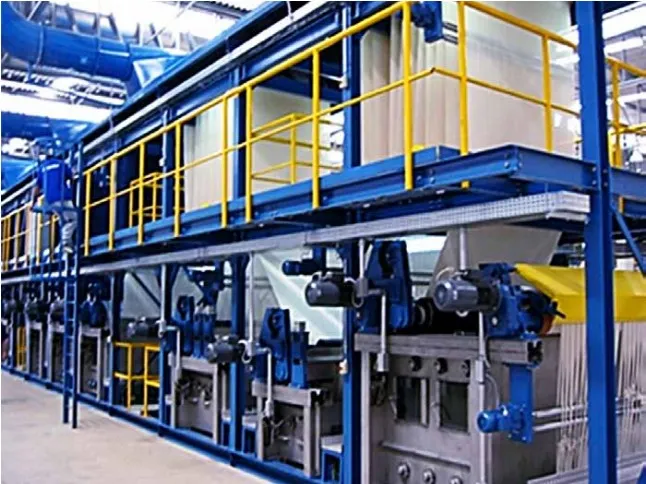
– Dyeing with sulphur dyes
In principle, sulphur dyeing works like traditional indigo dyeing: the dye is insoluble and a solvent is needed to dissolve it. The difference is that the dye is liquid, so it dissolves more easily. This method uses a higher concentration of dye and less alkali. Also, instead of letting the dye oxidise naturally in the air, chemicals are used to speed up oxidation. It is more efficient and more environmentally friendly: where indigo powder needs 4–12 dips, this method needs only 1–2 to reach the desired colour.
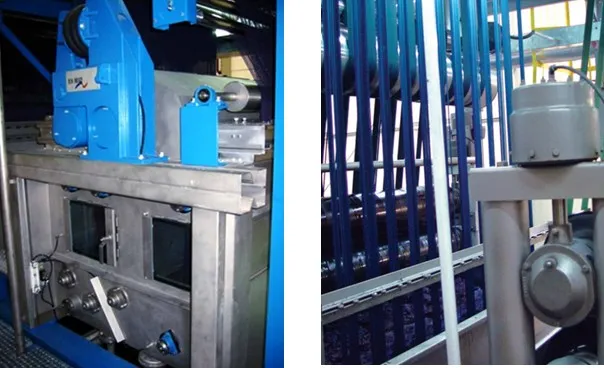
This method is usually used to make denim in other colours such as black, brown or red. Many manufacturers also combine traditional indigo and sulphur dyeing to achieve the results they want.
3. Sizing the yarn
Sizing is an essential step: it makes the yarn stiffer and stronger, able to withstand the physical and chemical stresses of making jeans later on. At denim mills, sizing usually follows straight after dyeing. Notably, sizing is applied only to the warp yarns, which is why it can be done right after dyeing (dyeing is also only for the warp).
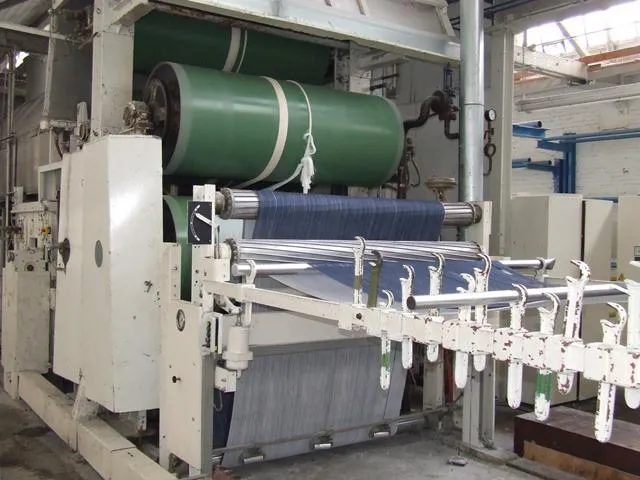
The dyed yarn is dipped in a size solution and then dried on drying cylinders. There are two groups of sizing agents: natural or semi-natural, and synthetic. Natural agents include starch, size, proteins, CMC (carboxymethyl cellulose) or CMG. Starch does not dissolve in water, so enzymes are needed to remove it, while CMC and CMG dissolve in water and can be washed out with water. Synthetic agents include PVA, polymers and polyester; like CMC and CMG, they dissolve in water and are easy to wash out.
4. Weaving denim
Denim is made of warp and weft yarns woven together. The warp is the coloured yarn that has gone through several treatments, while the white yarn is raw, untreated cotton. There are three weaves for denim: twill, taffeta and sateen. Twill is by far the most common.
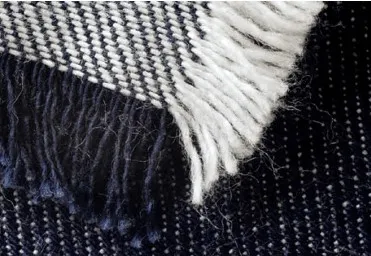
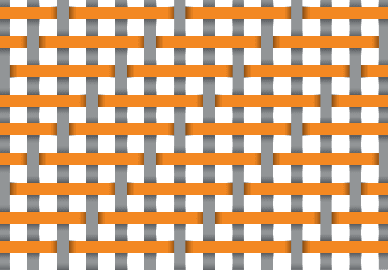
How jeans fabric is woven
Twill weaves are usually described as a fraction, for example 3/1: the numerator is the number of warp yarns lifted as the weft passes, and the denominator the number lowered. In this example the yarns interlace in a 3:1 ratio, three up and one down, which the industry calls “3 up, 1 down”.
In the 1990s, manufacturers began weaving elastic yarn together with non-stretch cotton to make stretch denim. Stretch denim is very common today because it is used for close-fitting jeans, especially for women. If you pull a pair of stretch jeans in different directions, you will see they stretch widthways but not lengthways. Manufacturers usually put the elastic yarn in the weft, so the denim stretches across. For styles that need to stretch both ways (jeggings), elastic yarn is used in both the weft and the warp. Today’s elastic yarns withstand physical and chemical stress better, allowing jeans brands to create worn and stone-washed effects without harming the denim.
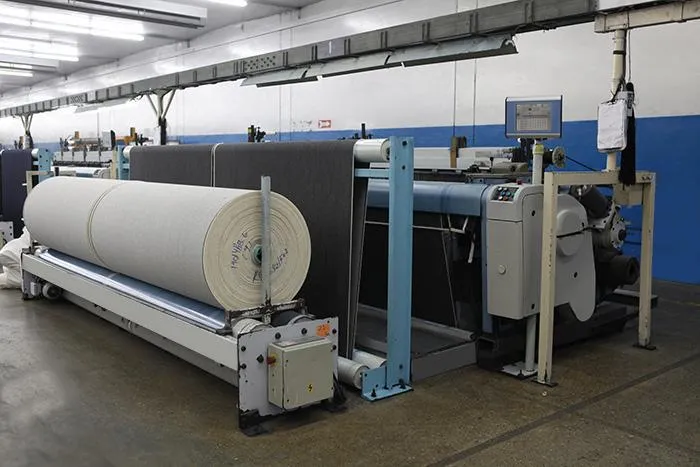
At the end of weaving we have raw denim, also called raw denim. Before it is sold, the raw denim is inspected for quality. Defects are recorded and marked with coloured pens, so jeans manufacturers can easily spot and cut around them.
Related articles