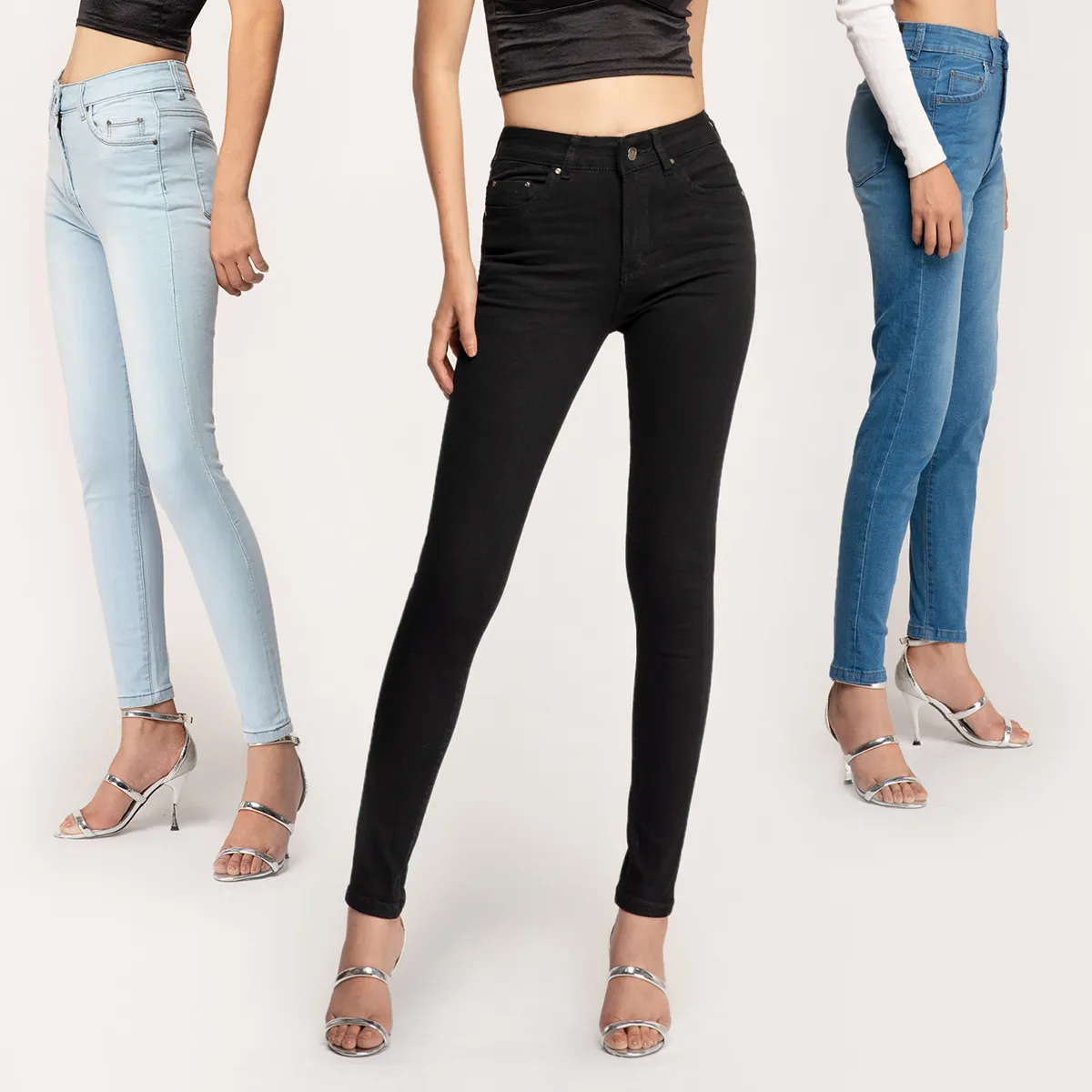
Making a pair of jeans takes a long time and many different stages to turn cotton fibre into the jeans we wear every day. Aaa Jeans summarises the general process below.
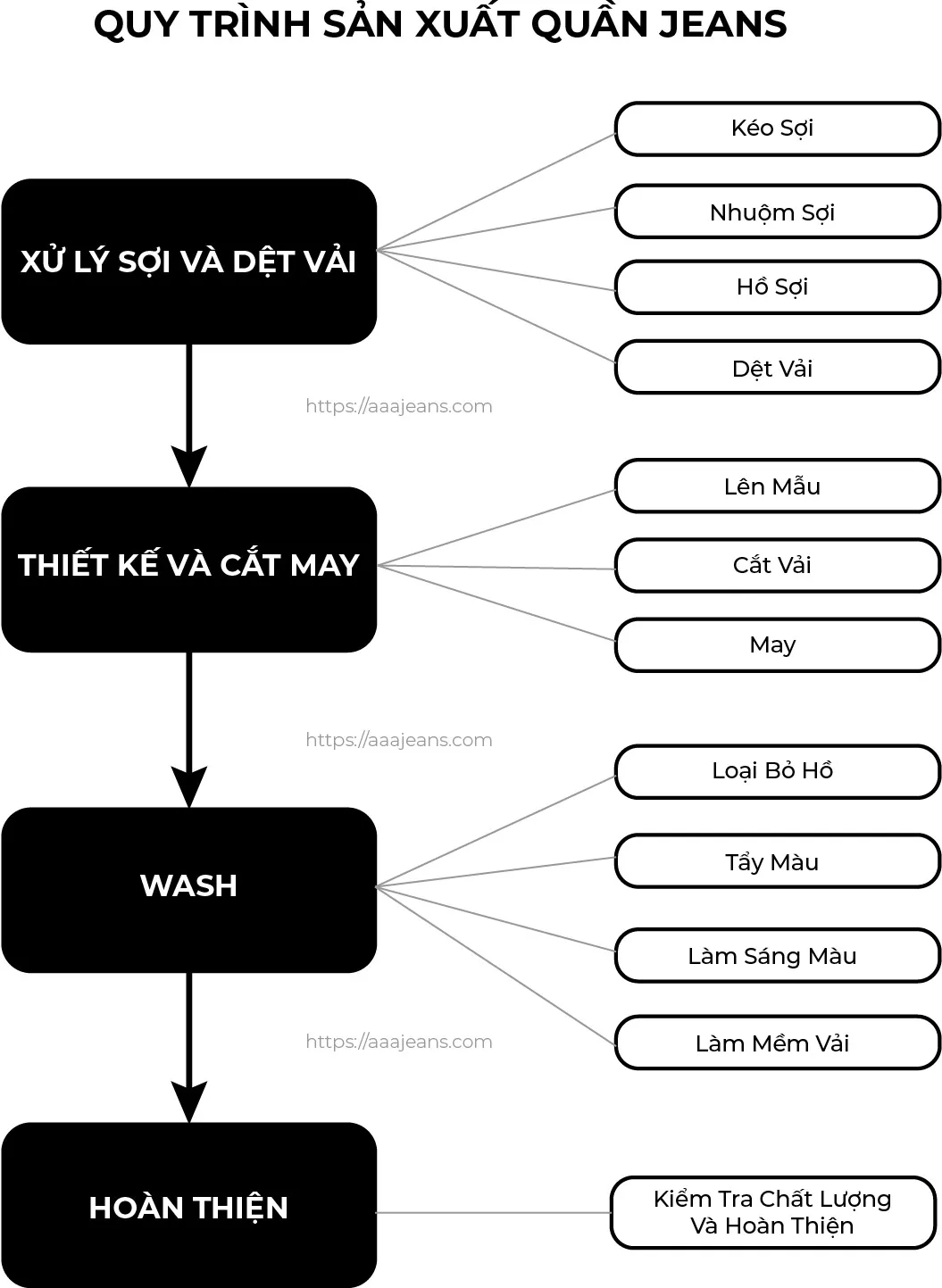
The jeans production process
Jeans production starts with cotton ginning. Cotton is harvested in the field, processed and packed into bales. The bales are taken to the mill, opened and separated into small tufts. After inspection, the tufts go to carding, where impurities are removed and the fibres are untangled and straightened, then gathered into smaller slivers. These are then spun and twisted into cotton yarn. Some of the yarn is dyed indigo (sometimes several times so the colour lasts) and some is left undyed to keep its natural white.
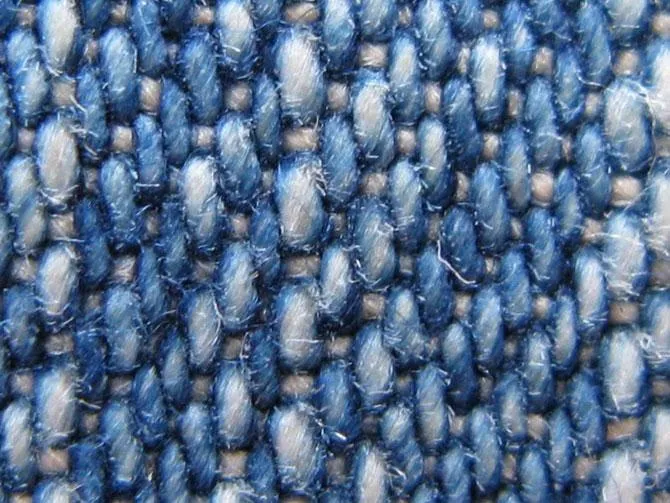
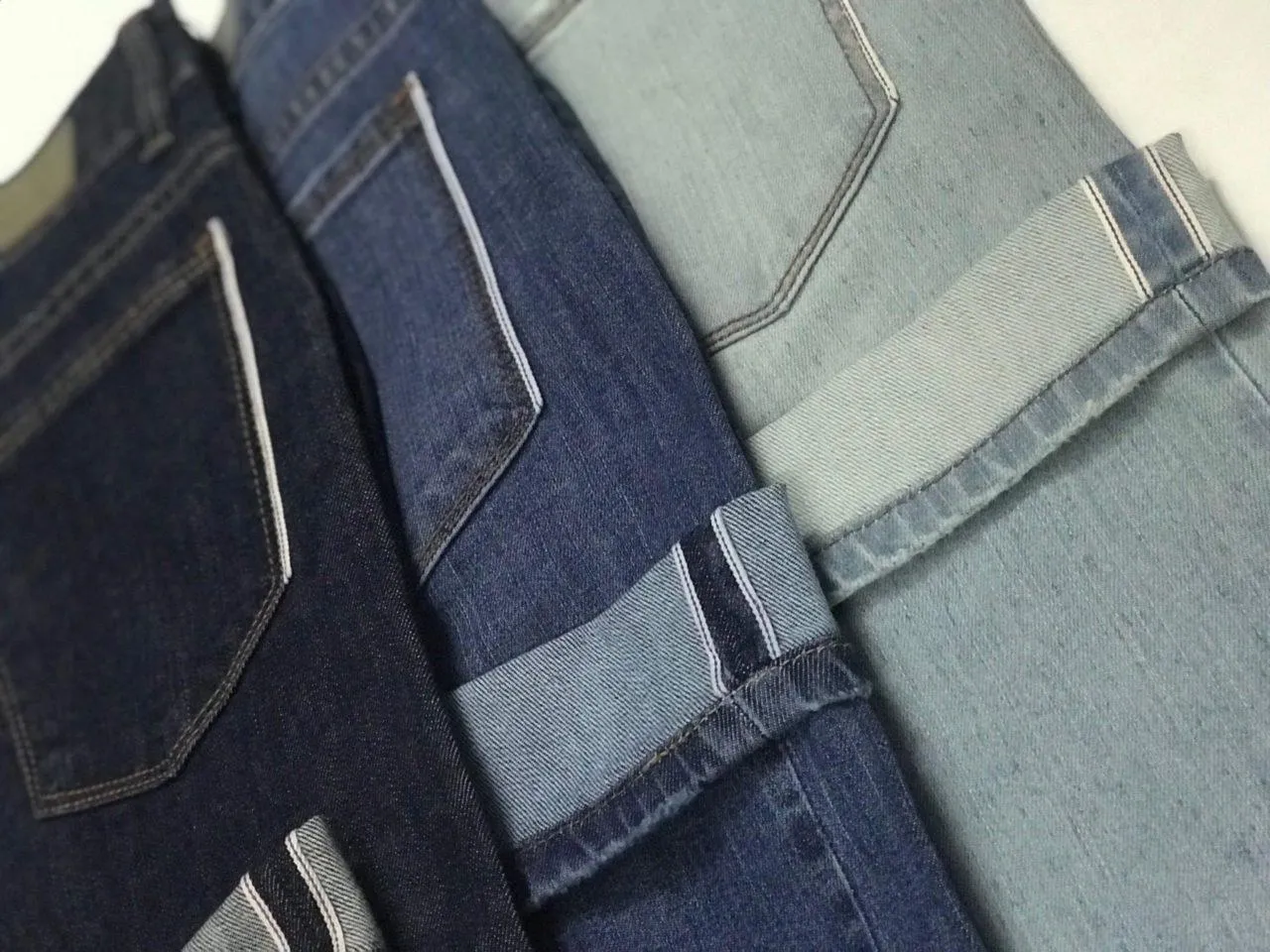
A close-up of jeans fabric yarns
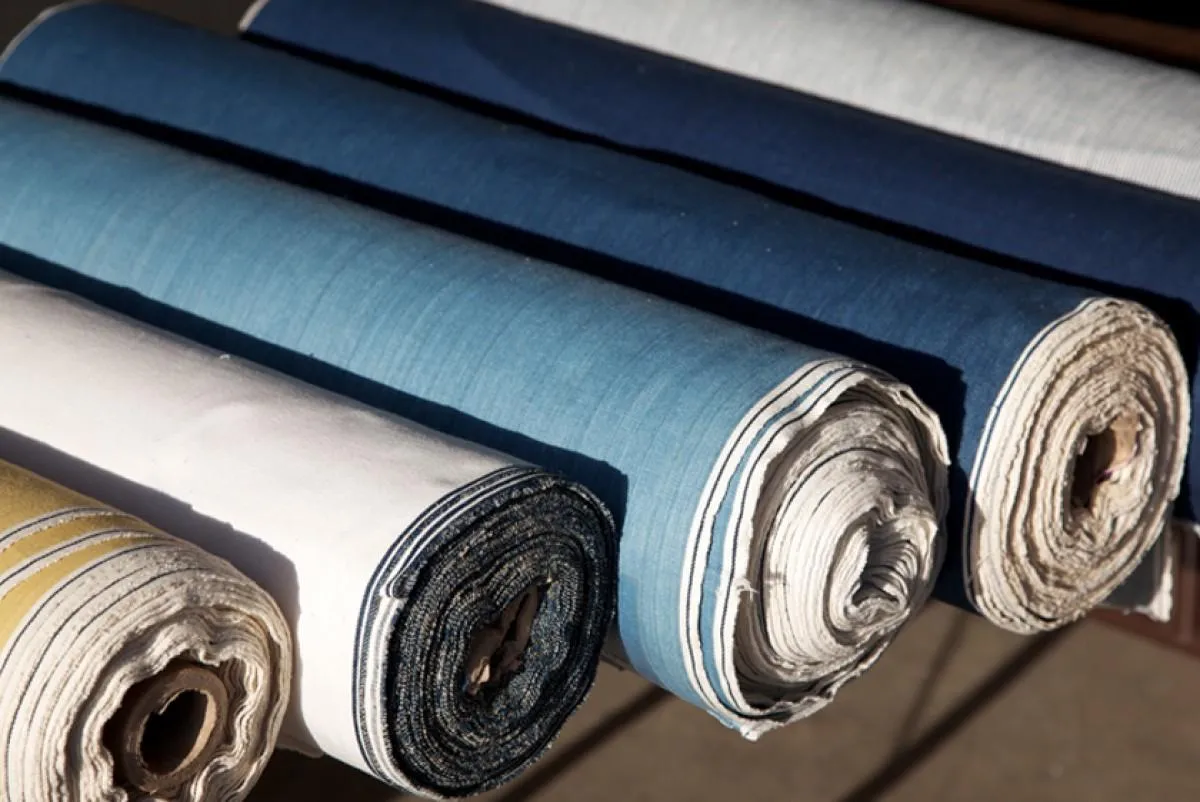
After dyeing, the yarn is coated with a thin layer of size (a kind of starch) to make it stronger and stiffer. The dyed and white yarns are then woven on large looms into jeans fabric: the blue yarns form tightly packed warp threads and the white yarns form the weft, so the finished fabric looks blue. This kind of fabric is called denim. After weaving, the denim is finished by brushing to remove loose threads and lint so it does not twist or shrink. The finished denim is stacked in many layers (usually around 100) and cut to the pattern to make the parts of the jeans.
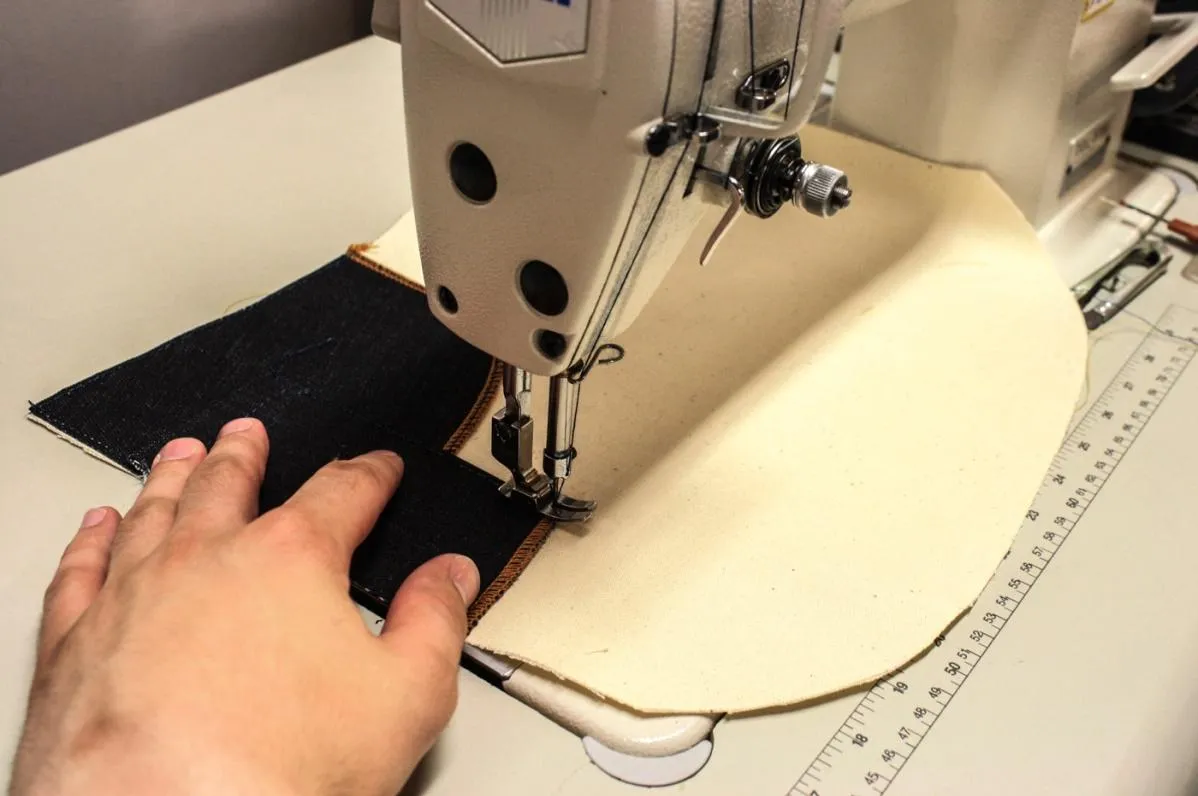
On average, a pair of jeans is made from more than 10 pieces of fabric, such as pockets, legs, waistband and belt loops. Depending on the factory, these parts are sewn on different lines until the jeans are complete. At this point the jeans are not ready to leave the factory yet: after sewing, they need to be washed. Depending on the colour and look required, jeans are washed in different ways for colour, abrasion, wear or rips.

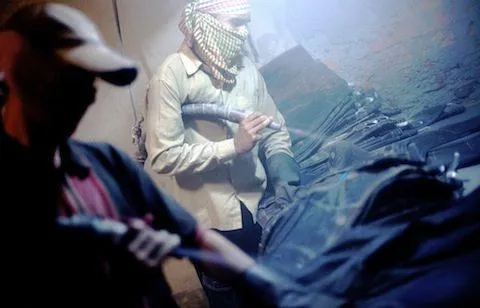
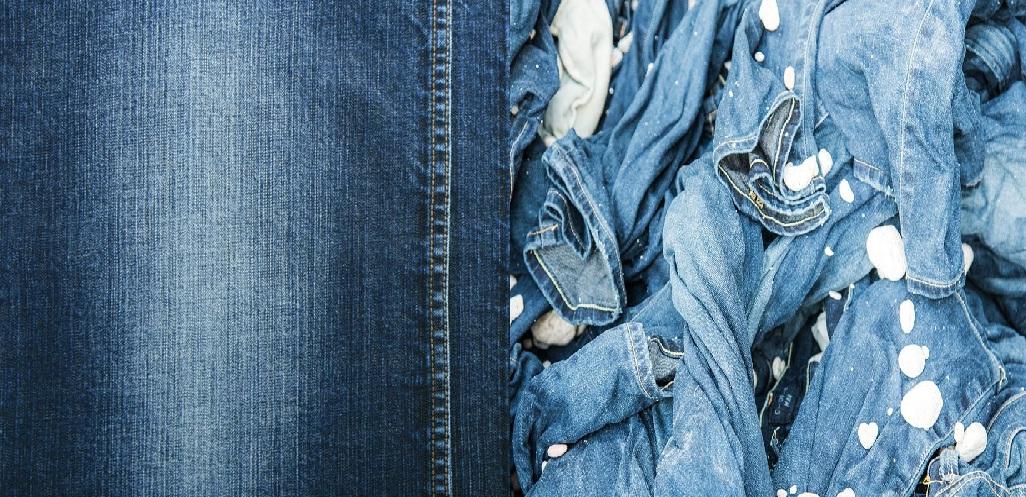
Some jeans washing methods
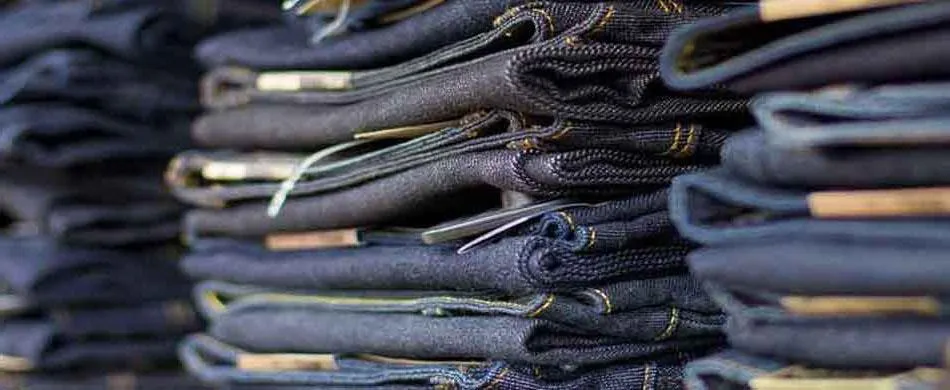
After washing, the jeans are checked for quality and go through final finishing: buttons and rivets are attached, labels sewn on, then the jeans are pressed, packed and sent to the warehouse, ready for sale.
Related articles
Yarn processing and weaving
Design, cutting and sewing
An overview of jeans washing
Quality control and finishing